
SEO for Dentists, also known as dental search engine optimization, focuses on enhancing the online presence of dental practices through targeted strategies. SEO for dentists involves optimizing websites, local listings, and content to capture potential patients searching for dental services. By improving dental website SEO with local SEO for dentists, clinics increase their chances of appearing in relevant search results and local map packs, driving more qualified traffic.
Proven SEO techniques for dentists include technical optimization, content marketing, and reputation management. These strategies work together to improve search rankings, boost brand authority, and generate consistent patient leads. A strong focus on local SEO ensures dental practices connect with nearby patients at the right time in their decision-making process.
Selecting the right dentist-SEO agency plays a critical role in achieving measurable and sustainable results. Expert agencies customize campaigns to meet unique clinic goals, patient demographics, and competitive industries. This specialized approach to dental SEO maximizes patient acquisition and strengthens long-term online visibility, helping practices outperform competitors and grow steadily in local markets.

What is Dental SEO?
Dental SEO (search engine optimization for dentists) refers to practices that elevate visibility of a dental practice online. Dental SEO strategies include keyword research focused on dental services, content optimization on site content pages, local listing setup, backlink building, technical improvements, structured data markup, and mobile‑friendly design. Dental SEO links potential patients with dental practices through organic search queries like “dentist near me” or “teeth whitening [city]”.
An entity definition emerges: Dental SEO refers to techniques that grow organic traffic from search engines for dental practices. Dental SEO repeats that term as it appears above. Dental SEO uses strategies such as optimized service‑page content, local schema markup, online review management, Google Business Profile optimization, and relevant backlinks to build authority. Dental SEO also includes local SEO steps like creating city‑targeted pages, consistent citations, service‑area optimization, and review engagement.
Dental SEO improves quality and quantity of website traffic through unpaid search results. Dental SEO excludes paid ads or pay‑per‑click campaigns. Dental SEO emphasizes publishing valuable, relevant content aligned with dental patient intent. Dental SEO process converts search queries into appointments by showcasing expertise, trust, and geographic relevance.
Is Dental SEO important for Dentists?
Yes, Dental SEO is important for dentists. Dental SEO improves visibility in organic search results where potential patients search for dental care. Dental SEO ensures that dental practices appear in local map packs, Google Business Profiles, and high‑ranking website listings.
Dental SEO is important for dentists because patients search online before booking appointments. Dental SEO increases organic traffic, which leads to more phone calls and form submissions. Dental SEO builds trust by highlighting reviews, accurate citations, and professional service information. Dental SEO is essential because search visibility influences patient choice, and most clicks go to top results.
Dental SEO also strengthens reputation signals that align with Google ranking systems. Dental SEO integrates local SEO, content marketing, and technical optimization to deliver sustained growth for dental practices. Dental SEO therefore supports patient acquisition, practice credibility, and long‑term competitiveness in local markets.
What are the Main Benefits of Doing SEO for Dental Practices?
Dental SEO delivers measurable value for dental practices by combining visibility, credibility, and patient acquisition strategies. Dental SEO provides multiple advantages that improve both short‑term lead generation and long‑term growth.
- Higher ranking positions in search results: Dental SEO improves keyword visibility, helping dental practices appear at the top of Google search results.
- Increased new patient appointments: Dental SEO drives targeted traffic from patients searching for dental services, leading to more scheduled visits.
- Lower marketing costs compared to traditional methods: Dental SEO reduces dependence on costly print, radio, and billboard advertising by focusing on organic growth.
- Stronger local brand recognition: Dental SEO enhances presence in local map results, which builds recognition within the immediate community.
- Improved patient trust and credibility: Dental SEO highlights reviews, accurate information, and expertise signals, which boost professional credibility online.
- Better user experience on your website: Dental SEO requires improvements in navigation, site architecture, and mobile design, creating a smoother experience.
- Enhanced online reputation management: Dental SEO integrates review monitoring and reputation signals that influence patient trust and decision‑making.
- Access to measurable marketing insights: Dental SEO provides data through analytics platforms, enabling tracking of traffic, rankings, and patient conversion.
- Reduced reliance on paid advertising: Dental SEO generates long‑term traffic without continuous ad spending, offering more stability in lead generation.
- Sustainable, long-term practice growth: Dental SEO builds authority, improves visibility, and supports consistent patient acquisition over extended periods.
Dental SEO therefore, strengthens both visibility and profitability. Dental SEO positions dental practices for ongoing growth by aligning with patient search behavior and digital trust signals.
Does SEO Work for Every Type of Dental Practice?
Yes, SEO works for every type of dental practice. Dental SEO adapts to the services and patient needs of different dental specialties.
General dentistry benefits from Dental SEO because patients search for preventive care, checkups, and routine cleanings. Pediatric dentistry gains visibility through Dental SEO when parents look for child‑friendly dental specialists nearby. Orthodontic practices increase appointments with Dental SEO by targeting keywords like braces, clear aligners, and Invisalign. Cosmetic dentistry attracts patients searching for teeth whitening, veneers, and smile makeovers through optimized content and local listings. Endodontic practices improve visibility for urgent services like root canals with Dental SEO targeting emergency intent queries.
Dental SEO therefore applies across specialties because patients consistently rely on search engines to find dental care. Dental SEO personalizes keywords, content, and local optimization steps to match specific treatments, locations, and patient demographics. This adaptability ensures that Dental SEO drives patient acquisition for both general and specialized dental practices.
What are the Best Ways for Dentists to Get Started with SEO?
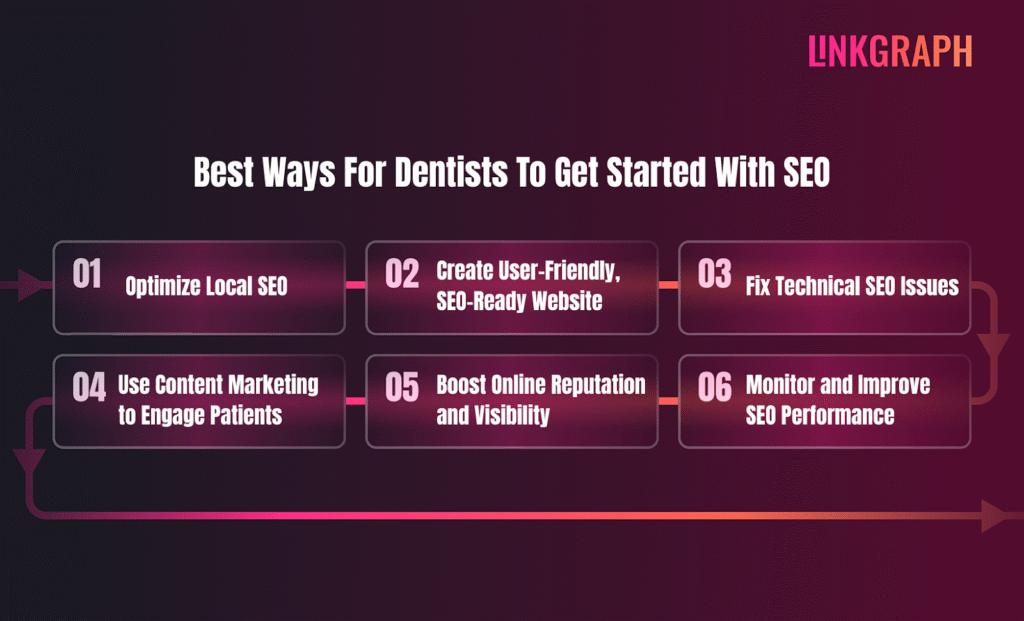
The best way to get started with SEO for a dental practice is to focus on local SEO, website optimization, and content creation. Dental SEO works best when both visibility and patient trust improve at the same time. There are two key parts of SEO that dentists must prioritize in optimization. These are the “Map Pack” and the “Search Engine Results Page” (SERP).
The best ways for dentists to get started with SEO using these tools have been listed below.
- Optimize Your Dental Practice for Local SEO.
- Make Your Dental Website User-Friendly and SEO-Ready.
- Address Technical SEO Errors for Your Dental Website.
- Leverage Content Marketing to Attract and Inform Dental Patients.
- Build Your Dental Practice’s Reputation and Visibility Online.
- Monitor, Analyze, and Continuously Improve Your Dental SEO Efforts.
Dental SEO, therefore, begins with strong foundations in local optimization, site performance, and content strategy. Dental SEO continues to build momentum through reputation management and consistent performance tracking for long‑term growth. We have broken down the best ways for dentists to get started with SEO below.
1. Optimize Your Dental Practice for Local SEO
Local SEO establishes strong visibility for dental practices within regional searches. Patients search for nearby clinics, and search engines prioritize businesses with strong local signals. Optimization improves map rankings, strengthens credibility, and drives appointment requests from local patients.
Claim and Fully Optimize Your Google Business Profile
A Google Business Profile creates a verified online presence for a dental practice and strengthens local ranking signals. A complete profile provides patients with accurate details in search and maps. Optimization includes selecting the correct category such as Dentist, uploading photos of the clinic and staff, writing a clear description of services, and enabling Q&A for patient inquiries. Updated business hours, appointment booking links, and service details improve engagement. A New York dental clinic optimized its profile with professional photos and precise service listings and gained a 35% increase in calls from Google Maps within three months.
Build local citations and backlinks
Local citations and backlinks confirm credibility for dental practices in local search results. Citations place practice details in trusted directories, while backlinks from associations, regional press, and community sites increase authority. Implementation requires submitting listings to healthcare platforms, publishing regional press releases, and partnering with local organizations to earn links. Tracking and correcting duplicates prevents confusion for search engines. A clinic in Chicago improved referral traffic by 22% after adding listings to Healthgrades and securing a backlink through a regional oral health association partnership.
Maintain Consistent NAP
Name, Address, and Phone consistency is critical for accurate indexing and patient trust. Inconsistent details across directories weaken search engine confidence and create confusion for patients. Practices need to audit all listings, standardize clinic names, addresses, and phone formats, and update outdated or duplicate entries. Using SEO tools to identify errors ensures accuracy across directories, social media, and healthcare portals. A Florida clinic improved local search impressions by 28% in two months after correcting NAP inconsistencies across Yelp, Bing Places, and Healthgrades.
Target Location-specific Topics
Location-specific topics help dental practices rank for searches tied to neighborhoods and cities. Content written for terms like “emergency dentist in Clifton” attracts high-intent patients searching for immediate care. Practices create dedicated service pages, publish blogs about local dental concerns, and develop FAQs related to community needs. Highlighting partnerships with local hospitals or clinics further boosts credibility. A Houston practice built a landing page titled “Affordable Braces in Houston Heights,” which ranked in the top three results within four months and generated new appointment bookings.
Apply Local Schema Markup
Local Schema Markup provides structured data that strengthens search engine understanding of dental practice information. Schema improves eligibility for rich snippets, map packs, and voice search results. Practices implement schema types like LocalBusiness or Dentist and include attributes such as address, phone, services, and business hours. Adding geocoordinates clarifies map placement, while testing with Google Rich Results Test ensures accuracy. A Los Angeles practice added Dentist schema markup, and Google displayed opening hours directly in the snippet, which increased click-through rates by 18%.
Actively Respond to Patient Reviews on Google and Other Review Platforms
Reviews influence local SEO rankings and shape patient trust. Search engines evaluate review activity, while patients assess credibility through them. Practices encourage satisfied patients to leave reviews, respond with appreciation to positive feedback, and address negative reviews with professionalism and clear solutions. Monitoring platforms like Google, Yelp, Zocdoc, and Healthgrades ensures a complete response strategy. A Philadelphia practice increased its average star rating from 4.1 to 4.6 by replying to every review within 48 hours, which also drove a 20% rise in new patient appointments.
2. Make Your Dental Website User-Friendly and SEO-Ready
A user-friendly and SEO-ready website improves both search rankings and patient satisfaction. Search engines favor websites that load quickly, adapt to mobile devices, and offer secure browsing. Patients stay longer on websites that are easy to navigate and provide clear pathways to essential information. These improvements strengthen trust and increase appointment conversions.
Improve Page Load Speed
Fast loading speed is a ranking factor in Google algorithm and a driver of patient engagement. A slow dental website frustrates visitors and increases bounce rates, while a fast website improves conversions. Practices compress large images, implement lazy loading, and minimize heavy scripts and CSS files. Testing page speed with Google PageSpeed Insights or Core Web Vitals ensures performance remains strong. A dental clinic that reduced load time from 5.2 seconds to 2.1 seconds experienced a 27% decrease in bounce rate and a 19% increase in online bookings.
Prioritize Mobile Optimization
Mobile optimization ensures a dental website works smoothly across smartphones and tablets. Search engines index mobile versions first, so poorly optimized pages lose visibility. Practices must use responsive design, scalable fonts, and tap-friendly buttons to create an accessible mobile experience. Regular testing across devices confirms smooth functionality. A clinic in Miami redesigned its website with a mobile-first layout and saw mobile appointment requests grow by 32% within four months.
Ensure Secure Website Access
Secure websites protect patient information and improve SEO rankings. Google prioritizes HTTPS as a trust factor, and patients expect encrypted communication for forms and inquiries. Practices install SSL certificates, enforce HTTPS redirects, and display trust badges for reassurance. Monitoring expiration dates avoids lapses in security. A Dallas clinic enabled HTTPS and SSL across all pages, leading to a 21% improvement in keyword rankings and a 15% rise in new patient leads.
Design a User-Friendly Website
A user-friendly dental website reduces friction in the patient journey and supports higher conversions. Effective design includes clear navigation, strong calls-to-action, and intuitive layouts. Practices highlight key services on the homepage, feature appointment booking buttons prominently, and ensure contact details are visible without scrolling. Adding testimonials and service photos builds trust. A Boston dental practice redesigned its homepage with simplified navigation and a direct booking button, which increased online appointment scheduling by 24%.
Build Logical Site Architecture and Internal Linking
Logical site architecture improves crawlability for search engines and helps patients access information within a few clicks. Internal linking distributes authority between pages and guides users to important services. Practices group services under clear categories, connect blogs to service pages, and maintain a sitemap for structure. Avoiding deep page hierarchies keeps navigation simple. A San Diego clinic improved rankings for multiple service pages after restructuring its website and adding internal links between treatment blogs and service pages..
3. Address Technical SEO Errors for Your Dental Website
Technical SEO ensures that a dental website is accessible, indexable, and optimized for search engines. Without proper technical health, even the best-designed content struggles to rank. Fixing errors improves crawl efficiency, strengthens visibility, and enhances patient access to essential services. Regular audits, structured markup, and corrected indexing issues all contribute to stronger performance.
Regularly Audit Your Website to Fix Technical SEO Issues
A technical SEO audit identifies hidden problems that reduce website visibility and performance. Common issues include crawl errors, broken links, and duplicate pages. Addressing these problems helps search engines access and rank important pages. Practices schedule quarterly audits using tools like Search Atlas Site Auditor or Google Search Console. Fixing errors ensures patients encounter a clean browsing experience. A dental clinic in Denver reduced crawl errors by 70% after a complete audit, leading to a 23% rise in organic traffic.
Keep Your XML Sitemap and Robots.txt File Updated
XML sitemaps guide search engines to important pages, while robots.txt controls crawling activity. Outdated or missing files block search engines from accessing essential services. Practices submit XML sitemaps to Google Search Console and update them whenever new service pages are added. Robots.txt blocks duplicate content, admin areas, and thin pages. Testing with Google URL Inspection Tool verifies correct indexing. A clinic in Seattle updated its sitemap and robots.txt and gained a 15% increase in indexed pages within two months.
Implement Structured Data Markup
Structured data markup provides search engines with context about dental services and clinic details. Markup types such as Dentist, LocalBusiness, FAQ, and Review enhance visibility in rich results and generative search outputs. Implementation involves adding schema code to webpages and validating it with Google Rich Results Test. Structured data improves eligibility for features like star ratings, opening hours, and FAQ displays in search results. A Los Angeles practice added Dentist schema and FAQ markup, leading to a 20% increase in click-through rates from search snippets.
Address Website Indexing Issues
Indexing issues prevent important pages from appearing in search results. Causes include blocked pages, incorrect canonical tags, and duplicate URLs. Practices must monitor indexing status through Google Search Console and resolve flagged problems quickly. Correcting canonical tags, setting redirects, and eliminating duplicate content ensures every valuable page is discoverable. Compressing images and reducing unnecessary scripts also improves crawl efficiency. A Houston dental clinic fixed duplicate content and indexing errors and saw a 28% growth in impressions within three months.
4. Leverage Content Marketing to Attract and Inform Dental Patients
Content marketing connects dental practices with patients by addressing real needs and building trust. Search engines prioritize accurate, valuable, and well-structured content that answers questions at different stages of the decision-making process. Strong content strategies improve rankings, attract new patients, and establish authority in competitive local markets.
Create Topical Map and Write Content Around Patient Needs and Questions
A topical map organizes content around the most common dental questions and services. Patients search for specific concerns, and answering them directly increases visibility and trust. Practices identify topics such as preventive care, emergency dentistry, and cosmetic treatments. Aligning each page or blog post with patient intent ensures coverage of every stage in the decision journey. A Dallas dental clinic built a topical map that included FAQs about root canals and cosmetic procedures, resulting in a 33% increase in organic traffic within six months.
Publish Accurate and Authoritative Content
Accurate and authoritative content strengthens credibility and supports higher rankings. Patients trust dental websites that cite reliable sources, reference dental associations, and explain treatments clearly. Content must highlight expertise while remaining accessible to non-medical readers. Publishing blogs, treatment guides, and case studies increases authority and improves search performance. A Boston practice created a series of evidence-backed articles on pediatric dentistry and received a 25% boost in keyword rankings for child dental care topics.
Optimize Content for Conversational and Voice Search Queries
Conversational and voice search queries continue to grow, especially in local searches. Patients often ask natural questions such as “Where is the nearest dentist open now?” Optimizing content with question-based headings, FAQs, and natural language phrases aligns with these searches. Practices include location terms and provide direct answers within 30 words. A Phoenix clinic optimized its service pages with conversational headings and FAQs, resulting in a 19% increase in traffic from mobile voice searches.
Interlink Content Strategically Between Root, Seed, and Node
Strategic internal linking improves navigation and distributes authority between content layers. Root pages represent core services, seed pages expand on categories, and node pages cover detailed topics. Linking across these layers creates a strong hierarchy that benefits both search engines and patients. Practices connect blogs to service pages and ensure important treatments are always two to three clicks from the homepage. A San Diego dental practice restructured its site with root-seed-node interlinking and saw an 18% improvement in rankings for multiple service keywords.
Update and Refresh Your Existing Content
Regular content updates maintain accuracy and signal relevance to search engines. Outdated service information or statistics reduces patient trust and hurts rankings. Practices review old content quarterly, update treatment details, refresh statistics, and expand sections that lack depth. Adding new internal links keeps pages connected to current strategies. A New York practice refreshed a five-year-old blog on teeth whitening by adding new treatment options and updated photos. The refreshed content improved its search position from page three to page one, increasing monthly visits by 40%.
5. Build Your Dental Practice’s Reputation and Visibility Online
Reputation and visibility are central to attracting new dental patients in competitive local markets. Strong off-page signals, consistent branding, and professional relationships build trust with both search engines and communities. Effective strategies such as earning backlinks, using social media, and collaborating with influencers expand reach and improve rankings.
Earn High-Quality Backlinks
High-quality backlinks act as votes of trust from authoritative websites. Search engines interpret backlinks from reputable sources as signals of credibility, which directly impact rankings. Dental practices focus on industry-related and local authority sites for sustainable link growth. Strategies include publishing guest posts on dental associations, sponsoring local events, or contributing expert commentary to regional media outlets. A Chicago practice partnered with a dental education blog to publish an expert article, earning backlinks that improved domain authority and increased new patient inquiries by 20%.
Maintain Active and Consistent Social Media Profiles
Active social media profiles increase visibility, drive website traffic, and enhance patient engagement. Search engines recognize social signals as part of brand authority. Practices post consistently, share educational videos, highlight patient success stories, and engage with community updates. Cross-linking social media profiles with websites and directories reinforces brand consistency. A Miami dental practice grew its Instagram presence by posting before-and-after treatment photos and running Q&A sessions. Engagement increased by 40%, and website visits from social platforms doubled within three months.
Leverage Email Newsletter
Email newsletters maintain relationships with current patients while attracting referrals through consistent communication. Regular updates showcase expertise, provide dental care tips, and promote seasonal services. Effective newsletters include strong subject lines, engaging visuals, and clear calls-to-action. Segmentation by treatment interest improves relevance. A Dallas practice introduced a monthly newsletter with cleaning reminders and whitening promotions. Open rates reached 38%, and appointment bookings increased by 17% over six months.
Collaborate with Local Influencers or Healthcare Professionals
Collaborations expand reach by tapping into trusted networks. Partnerships with influencers, local fitness trainers, or healthcare professionals create new exposure opportunities. Joint webinars, guest blogs, or co-hosted events attract local attention and establish credibility. Backlinks and social mentions generated through partnerships further support rankings. A San Francisco practice collaborated with a local nutritionist to host an online seminar about oral health and diet. The campaign earned multiple backlinks, gained local press coverage, and generated 25% more new patient consultations that quarter.
6. Monitor, Analyze, and Continuously Improve Your Dental SEO Efforts
Monitoring and improvement ensure long-term success for dental SEO strategies. Search engines update algorithms frequently, and patient behavior shifts over time. Consistent tracking, analysis, and optimization allow dental practices to maintain rankings, strengthen visibility, and increase appointment conversions.
Set up Google Search Console and Google Analytics 4
Google Search Console and Google Analytics 4 provide the foundation for SEO tracking. Search Console identifies indexing issues, tracks keyword performance, and highlights errors. Analytics measures website traffic, patient behavior, and conversion rates. Setting up both tools allows practices to evaluate how patients find services and where they drop off in the journey. A Houston dental clinic used Search Console to fix 120 indexing errors and GA4 to track service page conversions, leading to a 22% increase in organic appointment requests.
Track Essential Metrics Regularly
Essential metrics measure progress and identify areas for improvement. Practices track organic traffic, keyword rankings, bounce rate, and conversion rate. Monitoring call-to-action performance, such as appointment bookings, reveals patient intent and site effectiveness. Weekly and monthly reports provide visibility into ongoing performance. A Boston dental practice tracked keyword growth for “cosmetic dentistry” and “teeth whitening” and saw traffic from these terms rise by 30% within four months.
Monitor Backlinks Growth and Citation Consistency
Backlink quality and citation consistency directly impact authority and local rankings. Practices track new referring domains, lost backlinks, and citation accuracy across directories. Tools like Ahrefs, Search Atlas, or Moz identify backlink performance and highlight opportunities. Regular monitoring prevents outdated or duplicate citations from weakening local signals. A Chicago practice monitored backlinks and corrected inconsistent citations across 12 directories, resulting in a 25% increase in map pack visibility.
Perform Quarterly Reviews of SEO Effectiveness
Quarterly reviews evaluate whether strategies deliver measurable results. Reviews include keyword performance, patient conversion trends, and technical health audits. Comparing quarterly metrics highlights which tactics work and which require adjustments. Practices update topical content, restructure underperforming pages, and reallocate budget toward proven strategies. A Seattle dental practice reviewed quarterly results, updated older content, and shifted focus to pediatric keywords. Organic traffic from parents increased by 18% within one quarter.
Implement A/B Testing or Heatmap Analysis
A/B testing and heatmap analysis identify patient interaction patterns and reveal opportunities for higher conversions. A/B testing compares different page versions to see which performs better, while heatmaps show where visitors click, scroll, or drop off. Practices test appointment button placements, CTAs, or page designs. Insights guide design decisions backed by data. A New York practice tested two homepage layouts, with one featuring a larger booking button above the fold. The winning version increased appointment form submissions by 27%.
How Long Does Organic SEO Take to Work for Dentists?
Organic SEO for dentists typically takes 4 to 6 months before measurable improvements appear in search rankings and traffic. In highly competitive markets such as large cities, results may take 6 to 12 months because multiple dental practices target the same keywords. The timeline depends on factors like website age, domain authority, competition level, and the quality of optimization strategies.
SEO takes time because search engines crawl, index, and evaluate websites gradually. Algorithms measure trust, authority, and relevance, which cannot be established instantly. A dental practice must build credibility through accurate content, consistent local citations, high-quality backlinks, and strong user experience signals. Google also rewards consistent performance over time, making sustained optimization essential.
Evidence from industry data shows that websites implementing technical SEO fixes and publishing high-quality content begin seeing organic traffic increases within four to six months. Practices with strong local SEO strategies, such as fully optimized Google Business Profiles and consistent NAP listings, often appear in map results earlier than in organic results. In contrast, practices that start with little online presence or poor technical health require longer to build authority.
A case study from a Los Angeles dental clinic illustrates this timeline. After launching a structured SEO campaign including local schema, citation building, and content optimization, the clinic saw its first ranking improvements after four months. By month nine, the practice achieved top three rankings for “emergency dentist in Los Angeles” and “teeth whitening Los Angeles,” which generated a 35% increase in patient appointments.
What Are the Other Effective Ways to Market Dental Practices Besides SEO?
SEO is a powerful long-term strategy, but dental practices benefit from combining it with other marketing methods. Multiple channels increase visibility, reach different patient groups, and create consistent lead flow. Below are effective approaches that complement dental SEO.
- Pay-Per-Click (PPC) Advertising: PPC campaigns place ads at the top of search results for targeted keywords such as “emergency dentist near me.” These campaigns generate immediate visibility and allow precise budget control.
- Social Media Marketing: Platforms like Facebook, Instagram, and TikTok engage patients with videos, before-and-after treatment photos, and educational posts. Active engagement builds community trust and increases referral potential.
- Content Marketing Beyond SEO: Educational videos, podcasts, and patient success stories expand brand authority and reach. These formats connect with patients who prefer visual or audio content.
- Referral Programs: Structured referral systems encourage existing patients to recommend services to family and friends. Incentives such as discounts or free cleanings motivate word-of-mouth growth.
- Local Community Engagement: Sponsorships, school dental awareness programs, and partnerships with local businesses improve brand recognition and generate offline referrals.
- Email Marketing: Regular newsletters keep patients engaged, remind them of checkups, and promote seasonal offers such as whitening packages.
- Online Directories and Review Platforms: Listings on Healthgrades, Zocdoc, and Yelp increase visibility and strengthen credibility with new patients searching for providers.
Combining these methods with SEO creates a balanced marketing strategy that supports both short-term visibility and long-term growth. Practices that diversify their marketing attract patients across multiple touchpoints and achieve stronger resilience in competitive markets.
Is GMB Optimization Enough for Dentists to Get Consistent Leads?
No, GMB optimization alone is not enough for consistent dental leads. A complete profile boosts visibility in Maps and local search, but results plateau without supporting SEO. Practices also need optimized websites, content marketing, backlinks, and citations to build long-term authority. Data shows GMB drives high-intent calls, but competitors with broader SEO strategies capture more patients. GMB is vital, but it delivers consistent leads when combined with full SEO efforts.
Is it Important For Dentists to Be Listed in Online Directories?
Yes, it is important for dentists to be listed in online directories. Directories like Healthgrades, Zocdoc, and Yelp strengthen local visibility, improve search rankings, and provide patients with trusted sources of clinic information. Listings also reinforce NAP consistency, which is a key local SEO signal.
Evidence shows that over 70% of patients use healthcare directories when searching for providers. Directory profiles with accurate contact details, services, and reviews generate referral traffic and increase appointment bookings. Without directory listings, dental practices risk losing patients to competitors with stronger online presence and wider coverage.
What are the Best Directories for Dentists to List their Practices On?
Listing a dental practice on trusted directories improves visibility, builds credibility, and drives patients actively searching for providers. These platforms generate direct leads and also strengthen local SEO through consistent citations. Below are some of the most effective directories for dentists.
- Yelp: Yelp attracts millions of local searches and displays reviews, ratings, and photos that influence patient decisions.
- Healthgrades: Healthgrades specializes in healthcare providers and allows patients to search by specialty, insurance, and location.
- Zocdoc: Zocdoc enables patients to book appointments online, view availability in real time, and read verified reviews.
- American Dental Association (ADA): ADA directory provides credibility by listing licensed dentists and supports professional recognition among peers and patients.
- 1-800-Dentist: This service connects patients directly to nearby dentists based on location and treatment needs.
- OpenCare: OpenCare verifies patient reviews and awards high-performing dental practices, increasing trust with potential patients.
- Dental Free Fairy: A specialized directory focusing on dental practices, helping connect patients with dentists offering affordable care options.
- Vitals.com: Vitals highlights detailed provider information, patient reviews, and ratings, making it a trusted healthcare directory.
- HealthProfs: HealthProfs lists healthcare providers, including dentists, and emphasizes holistic and specialty services.
- FreeDentalCare: This platform lists community clinics and providers offering affordable or free dental services to underserved patients.
Listing on multiple reputable directories increases dental practice reach, strengthens SEO signals, and ensures patients find accurate information. A strong presence across these platforms creates more pathways for new patient acquisition.
Is It Possible For Dentists to Implement SEO Strategies On Their Own?
Yes, dentists handle basic SEO tasks like Google Business Profile setup, NAP consistency, and simple blogs. However, advanced strategies such as technical SEO, structured data, and backlink building require expertise and time. Many practices see limited results when managing SEO alone. Hiring an expert like LinkGraph ensures complete optimization, faster growth, and fewer errors, allowing dentists to focus on patient care while specialists handle visibility and rankings.
Who Offers the Best SEO Services For Dentists In United States?
LinkGraph offers the best SEO services for dentists in the United States. The agency Delivers measurable growth through local SEO, technical fixes, content marketing, and backlink strategies designed for dental practices. Case studies show clinics achieving up to 35% more patient appointments within nine months, while testimonials highlight transparency and consistent lead growth. LinkGraph recognition on platforms like Clutch and G2 further validates its reputation. Proven performance, client satisfaction, and industry recognition make LinkGraph the top choice for dental SEO.
Which Types of SEO Services Does LinkGraph Offer to Dental Practices?
LinkGraph provides specialized SEO campaigns designed to meet the unique needs of dental practices. As a leading dental SEO agency, LinkGraph combines technical expertise with data-driven strategies to help clinics improve search visibility, patient acquisition, and long-term growth. Each campaign type is executed with precision, giving clients measurable outcomes and clear performance reporting. Below is an overview of the SEO services LinkGraph delivers for dental offices.
- Local SEO: Campaigns focus on optimizing Google Business Profiles, building local citations, and strengthening map visibility. Dentists gain higher rankings in local searches and attract patients within their service areas.
- Holistic SEO: LinkGraph creates integrated strategies that combine technical, content, and link-building efforts into one unified campaign. Dental practices benefit from sustainable growth and visibility across multiple search channels.
- On-Page SEO: Campaigns include optimizing metadata, headlines, images, and calls-to-action. Clients see improved keyword targeting and stronger user engagement on key service pages.
- Technical SEO: LinkGraph addresses crawl issues, indexation errors, Core Web Vitals, and site speed. This ensures dental websites meet search engine requirements and deliver smooth user experiences.
- Off-Page SEO / Link Building: LinkGraph secures high-quality backlinks from trusted healthcare platforms, associations, and local publishers. These campaigns build authority and push dental practices higher in competitive rankings.
- Content Marketing: Campaigns focus on creating blogs, FAQs, educational guides, and topical maps. Dentists benefit from authoritative content that attracts patients and ranks for high-intent searches.
- LLM and AI Overview Optimization: LinkGraph optimizes dental content for large language models and generative AI, ensuring practices appear in conversational and AI-driven search results.
- Local Map Pack Optimization: Campaigns maximize visibility in Google local map pack through reviews, citations, and schema. This drives appointment calls directly from Maps.
- UI/UX Optimization: LinkGraph improves design, navigation, and patient journey flow. Dentists see higher conversions from website visits to booked appointments.
- Structured Data and Schema Markup Integration: Schema is added to clarify services, reviews, and location details for search engines. Practices gain enhanced snippets and increased click-through rates.
- SEO Auditing: Detailed audits identify technical errors, ranking gaps, and performance opportunities. Clients receive actionable reports with clear roadmaps for improvement.
- Digital PR: Campaigns promote dental practices through press releases, media mentions, and healthcare partnerships. This improves both visibility and brand reputation.
LinkGraph offers complete dental practice SEO solutions tailored to each clinic. By combining expertise in local SEO, content, technical strategies, and digital PR, LinkGraph ensures dentists achieve measurable results, stronger rankings, and consistent patient growth.
What Type Of Dental Clinics Can Get SEO Services From LinkGraph?
At LinkGraph, specialized SEO services cater to a wide range of dental clinics. Whether operating as a solo practice or managing a multi-location brand, SEO strategies customize to match unique clinic goals, patient demographics, and competition. The types of dental clinics that benefit most from LinkGraph expert SEO campaigns are listed below.
- General Dentistry Clinics: SEO focuses on broad services like cleanings, exams, and preventative care to attract local families and individuals seeking routine dental care.
- Cosmetic Dentistry Practices: Campaigns highlight elective treatments such as teeth whitening, veneers, and smile makeovers to target patients interested in aesthetic improvements.
- Orthodontic Clinics: Strategies emphasize braces, clear aligners, and other orthodontic services, capturing families and adults searching for corrective treatments.
- Pediatric Dental Clinics: SEO targets parents looking for child-friendly dentists, including topics on early dental care and pediatric oral health education.
- Oral Surgery Clinics: Campaigns promote specialized surgical procedures like extractions and implants, reaching patients needing advanced dental care.
- Endodontic Clinics: Focused SEO highlights root canal treatments and pain relief, helping patients find expert care for dental emergencies and infections.
- Periodontic Clinics: SEO targets gum disease treatments and maintenance, attracting patients with periodontal concerns and prevention needs.
- Multi-Specialty Dental Clinics: Comprehensive strategies cover multiple dental disciplines, ensuring visibility for all offered services and increasing cross-referrals within the practice.
LinkGraph provides customized SEO services that empower dental clinics across specialties to improve search rankings, attract ideal patients, and achieve sustainable growth.
How Much Does LinkGraph SEO Agency Charge For Dentist SEO Services?
LinkGraph charges $2,000 to $6,000 per month for dental SEO services, depending on practice size, competition, and service scope. This covers local SEO, technical fixes, content, link building, and ongoing analysis. The investment delivers measurable patient growth and strong ROI. Case studies show clients recoup costs quickly through increased appointments. Pricing reflects expertise and results-focused strategies tailored to dental clinics.
Does LinkGraph Only Offer SEO Services For Dental Clinics?
LinkGraph serves many industries beyond dental clinics. The agency provides SEO for healthcare, legal, finance, e-commerce, and technology sectors. Proven success across these industries demonstrates LinkGraph broad expertise and ability to customize strategies for diverse clients.
What Other Industries Can Get SEO Services From LinkGraph?
LinkGraph offers SEO services to a variety of industries beyond dental practices. The most popular sectors served include:
- Legal Services: Law firms benefit from specialized SEO targeting competitive legal keywords and local searches, driving high-value client leads.
- E-commerce: Retail brands gain improved product visibility, optimized category pages, and enhanced user experience to boost online sales.
- Finance and Insurance: Financial advisors and insurance companies increase trust and lead generation through authoritative content and strict compliance SEO.
- Healthcare and Medical Practices: Beyond dentistry, medical clinics and specialists achieve better local visibility and patient acquisition with personalized SEO campaigns.
- Technology and SaaS: Tech companies improve search rankings for software products and services through technical SEO and content marketing.
- Real Estate: Real estate agencies enhance local market presence and generate leads with targeted local SEO and property listing optimizations.
LinkGraph uses cross-industry experience to craft customized SEO strategies that deliver measurable growth in competitive markets.
