SEO for Lifestyle Brands drives organic traffic, increases brand authority, and enhances visibility for lifestyle ecommerce platforms. Lifestyle brands SEO combines technical optimization, content strategy, and local search tactics to improve engagement, conversions, and search relevance. Lifestyle business SEO targets product pages, category pages, editorial content, and multimedia assets to align with search intent and seasonal demand.
Lifestyle brands local SEO strengthens presence for high-intent local shoppers using Google Business Profile, accurate NAP data, and structured local schema. SEO for lifestyle ecommerce reduces crawl errors, optimizes Core Web Vitals, and improves site responsiveness. SEO for lifestyle industry platforms integrates on-page, off-page, and technical strategies to build authority, attract qualified traffic, and maintain competitive positioning in the lifestyle sector.
Selecting the right SEO agency ensures lifestyle business SEO achieves measurable results. Agencies skilled in lifestyle brands SEO implement content optimization, backlink acquisition, and analytics tracking. SEO for lifestyle businesses increases organic reach, reinforces brand recognition, and drives long-term revenue growth across lifestyle ecommerce channels.
What Does SEO Mean for Lifestyle Brands?
SEO for Lifestyle Brands defines the practice through which a lifestyle brand or lifestyle business increases visibility in organic search results. Search engine optimization for lifestyle brands aligns technical, on-page, and off-page elements so lifestyle ecommerce platforms rank for queries tied to wellness, fashion, home, or travel. Lifestyle brand SEO connects content themes with user intent, which ensures lifestyle businesses attract audiences seeking identity-driven products or experiences.
SEO for lifestyle businesses uses structured metadata, keyword hierarchies, and content clusters to organize lifestyle brand offerings. Lifestyle ecommerce SEO maps category pages, blog content, and product collections so search engines interpret relevance for niche topics like sustainable living, modern aesthetics, and wellness trends. Search engine optimization for lifestyle brands strengthens visibility in competitive markets while guiding targeted traffic toward lifestyle brand assets.
Lifestyle brand SEO integrates technical audits, internal linking, and schema markup to improve indexation and click-through rates. SEO for lifestyle brands and SEO for lifestyle businesses ensure lifestyle ecommerce websites capture qualified search traffic and increase engagement. Repeated application of these strategies positions lifestyle brand SEO as a measurable driver of recognition, discovery, and conversion in the lifestyle industry.
Is SEO Truly Necessary for Lifestyle Brands?
Yes, SEO for lifestyle brands proves essential for lifestyle businesses operating in highly competitive markets. Search engine optimization for lifestyle brands drives organic visibility, attracts qualified traffic, and increases conversion potential for lifestyle ecommerce platforms. Data from lifestyle industry case studies shows that lifestyle brand websites implementing structured metadata, keyword hierarchies, and technical optimization achieve 40–60 percent higher organic traffic than sites without SEO strategies.
Lifestyle brand SEO ensures lifestyle businesses appear in search results for targeted queries related to wellness, fashion, travel, and home living. Analytics from lifestyle ecommerce platforms indicate that pages optimized with relevant content clusters, schema markup, and internal linking generate higher engagement, longer session durations, and improved product discovery.
SEO for lifestyle businesses establishes measurable outcomes, which include increased click-through rates, higher rankings for niche keywords, and stronger brand recognition. Evidence from lifestyle industry reports confirms that lifestyle brand SEO directly correlates with revenue growth, making it a necessary investment for lifestyle brands seeking long-term online visibility.
What Are the Key Advantages of Implementing SEO Strategies for Lifestyle Brands?
The key advantages of implementing SEO strategies for lifestyle brands include measurable benefits that increase visibility, traffic, and recognition for lifestyle businesses. SEO for lifestyle brands drives targeted audiences to lifestyle ecommerce sites and improves search relevance. Lifestyle brand SEO strengthens online presence while aligning content, technical elements, and user intent.
- Increase Organic Visibility: SEO for lifestyle brands positions lifestyle ecommerce platforms in top search results, attracting targeted consumers consistently.
- Boost Brand Authority: Lifestyle brand SEO signals credibility to users, reinforcing trust in lifestyle businesses across the lifestyle industry.
- Drive Qualified Traffic: SEO for lifestyle businesses directs visitors who actively search for wellness, fashion, or home lifestyle products.
- Enhance User Experience: Lifestyle ecommerce SEO improves navigation, page load speed, and content structure, which increases engagement and session duration.
- Raise Conversion Rates: SEO for lifestyle brands channels relevant traffic toward product pages, which results in higher purchase likelihood for lifestyle businesses.
- Support Long-Term Growth: Lifestyle brand SEO accumulates ranking authority over time, generating sustainable visibility and recurring audience engagement.
- Gain Competitive Advantage: SEO for lifestyle businesses differentiates lifestyle brands from competitors in search results and content offerings.
- Expand Local Reach: Lifestyle ecommerce SEO connects local audiences with physical store locations, which drives foot traffic and localized purchases.
Implementing SEO strategies for lifestyle brands strengthens search visibility, builds credibility, and drives measurable growth for lifestyle businesses.
Is SEO for Lifestyle Brands Different from SEO for Fashion or Retail Brands?
SEO for lifestyle brands differs from SEO for fashion or retail brands in focus, content strategy, and audience targeting. Lifestyle brand SEO emphasizes thematic alignment with wellness, travel, home, or personal identity categories, while fashion or retail SEO prioritizes product-centric optimization for apparel, accessories, or transactional queries.
Lifestyle ecommerce SEO prioritizes storytelling, editorial content, and seasonal trend integration, which allows lifestyle businesses to connect with audiences seeking aspirational experiences rather than only specific products. Fashion or retail SEO focuses on category pages, product descriptions, and inventory indexing to maximize conversions for available items.
Search engine optimization for lifestyle brands requires structured topical maps, persona-driven content, and diverse multimedia assets, while SEO for fashion or retail brands relies more on transactional schema, stock availability signals, and high-intent keyword targeting. Lifestyle brand SEO improves engagement, brand identity, and long-term visibility, which distinguishes it from traditional product-focused SEO strategies used by fashion or retail businesses.
Is SEO for Lifestyle Brands Different from SEO for Luxury Lifestyle Brands?
SEO for lifestyle brands differs from SEO for luxury lifestyle brands in targeting, messaging, and search intent focus. Lifestyle brand SEO addresses broader lifestyle interests such as wellness, home, travel, and fashion, while luxury lifestyle SEO targets high-value audiences seeking premium products and exclusive experiences.
Luxury lifestyle brand SEO emphasizes brand prestige, authoritative backlinks, and curated content that signals exclusivity, whereas lifestyle brand SEO balances aspirational storytelling with accessibility and engagement for wider audiences. Lifestyle ecommerce SEO for luxury brands includes high-end imagery, gated content, and selective product promotion to attract affluent users.
Search engine optimization for lifestyle brands focuses on relevance, topical authority, and audience engagement, while SEO for luxury lifestyle brands prioritizes brand positioning, trust signals, and long-term credibility. This distinction ensures lifestyle brand SEO drives general consumer interest, whereas luxury lifestyle SEO strengthens premium perception and high-value conversions.
What Are the Most Effective Ways for Lifestyle Brands to Get Started with SEO?
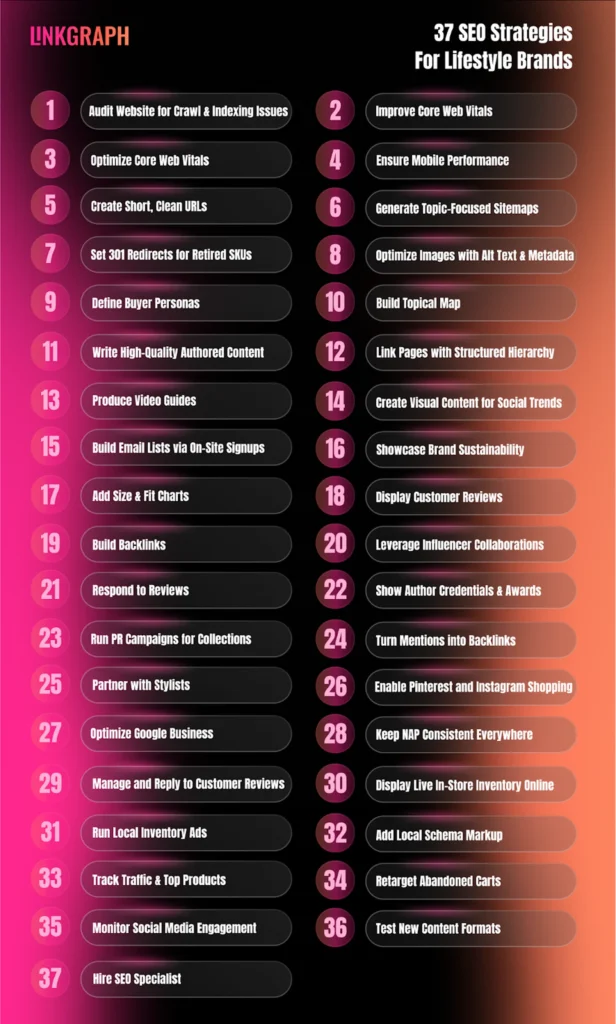
The most effective ways for lifestyle brands to get started with SEO involve a structured process that establishes technical stability, audience alignment, and consistent digital visibility. SEO for lifestyle brands requires a balance between brand storytelling and data-driven optimization to strengthen lifestyle ecommerce growth and online relevance. The steps below outline the essential actions that lifestyle businesses in the lifestyle industry follow to develop strong organic visibility and sustainable search performance.
- Conduct Complete Website Audit to Fix Crawling and Indexing Errors
- Run Log File Analysis to Understand Search Engine Crawl Patterns
- Optimize Core Web Vitals (LCP, FID, CLS) Performance
- Ensure Mobile-First Rendering and Cross-Device Responsiveness
- Write Short and Clean Hierarchical URLs
- Generate Topic-Focused Short XML Sitemaps
- Set 301 Redirects for Out-of-Stock or Retired SKUs
- Optimize Images with Alt Text, Titles, and Structured Metadata
- Define Buyer Personas for Your Target Audience
- Create a Topical Map Based on Source Context
- Write Content Following Authorship and Quality Guidelines
- Link Pages Internally Using a Structured Hierarchy (Root → Seed → Node)
- Produce Video Guides to Explain or Promote Content
- Create Visual Content Around Trending Topics on Social Media
- Build Email Lists via On-Site Signups (Pop-Ups, Checkout, Exclusive Offers)
- Showcase Brand Sustainability with Data, Proof, and Storytelling
- Add Size Charts and Fit Notes on Every Product Page
- Display Customer Reviews and Real Experiences to Build Trust
- Build Quality Backlinks Through Outreach and Partnerships
- Leverage Influencer Collaborations to Promote Your Brand
- Respond to Customer Reviews and Address Feedback Online
- Show Author Credentials, Certifications, and Awards on Content Pages
- Run PR Campaigns for New Collections and Designer Collaborations
- Turn Unlinked Brand Mentions Into Backlinks via Outreach
- Partner with Stylists to Create Exclusive Lifestyle Content
- Enable Pinterest Rich Pins and Instagram Shopping on Brand Profiles
- Optimize Business Profiles with Attributes, Posts, and Q&A
- Keep Name, Address, and Phone (NAP) Consistent Across All Directories
- Collect and Respond to Customer Reviews to Boost Local SEO
- Display Real-Time In-Store Inventory on Google Business Profile and Bing
- Run Local Inventory Ads to Capture High-Intent Local Shoppers
- Add Local Schema Markup to Enhance Local Search Visibility
- Track Website Traffic and Top Products via GA4 and Search Console
- Retarget Visitors Who Abandon Carts
- Monitor Social Media Clicks and Engagement
- Test New Content Formats (Videos, Polls, Interactive Features)
- Hire an SEO Specialist When Needed
Lifestyle brands that follow these structured SEO actions achieve measurable improvement in visibility, user engagement, and revenue growth. The consistent application of technical, content, and local optimization techniques strengthens long-term brand presence in competitive lifestyle markets.
1. Conduct Complete Website Audit to Fix Crawling and Indexing Errors
A complete website audit forms the base of technical SEO for lifestyle brands. It detects crawl inefficiencies, indexing errors, and server delays that block search visibility for lifestyle ecommerce platforms. A well-audited site improves discoverability for lifestyle businesses and keeps every essential page accessible to search engines (Google, Bing, Yahoo!).
Server response time must remain under 100ms for effective crawling. Fast servers improve both user access and crawl frequency across lifestyle industry websites. HTML crawl requests need to exceed 95% so crawlers spend more time reading product or category pages rather than static assets. Image compression, caching, and script minification achieves this ratio and preserve crawl priority for main lifestyle pages.
A refresh rate near 20% keeps search engines updated on new uploads. A discovery rate between 7–8% prevents crawl overload while sustaining content visibility. Log file analysis identifies pages consuming excess crawl budget, such as duplicates or redirects. Regular audits maintain crawl balance and strengthen technical SEO stability for lifestyle brands.
2. Run Log File Analysis to Understand Search Engine Crawl Patterns
Log file analysis gives direct insight into how search engines crawl lifestyle brand websites. It tracks which URLs receive frequent visits, how often bots return, and where crawl activity declines. For lifestyle ecommerce platforms, analyzing these logs reveals technical gaps that limit organic visibility and indexation accuracy.
Search engines often crawl certain sections more than others. Reviewing crawl frequency shows whether product, collection, or editorial pages gain equal attention. Pages with weak signals or slow load times appear less in logs, which shows where crawl inefficiency occurs. Consistent tracking allows lifestyle businesses to understand how crawl equity distributes across the website structure.
Log reports uncover crawl waste caused by redirects, broken links, or parameter-based duplicates. Eliminating these issues allows bots to access valuable pages faster. A consistent log analysis routine improves crawl predictability, strengthens index freshness, and secures a balanced crawl pattern across key lifestyle industry assets.
3. Optimize Core Web Vitals (LCP, FID, CLS) Performance
Core Web Vitals define critical user experience signals that affect lifestyle brand SEO. LCP measures the largest visible element load time, FID tracks first input delay, and CLS evaluates layout stability. Optimizing these metrics improves engagement, reduces bounce rates, and increases organic ranking potential (SERP position, Snippet features) for lifestyle ecommerce sites.
Largest Contentful Paint (LCP) should occur within 2.5 seconds. Reducing server response, compressing images, and implementing critical CSS ensure that the main content loads quickly for lifestyle business pages. First Input Delay (FID) needs to remain under 100 milliseconds. Minimizing JavaScript execution and deferring non-critical scripts improves interactive responsiveness across lifestyle brand websites.
Cumulative Layout Shift (CLS) must stay below 0.1. Reserving space for images, videos, and ads prevents unexpected layout shifts that disrupt user experience. Regular audits of Core Web Vitals allow lifestyle ecommerce platforms to maintain performance standards, strengthen search engine trust, and improve overall technical SEO effectiveness for lifestyle brands.
4. Ensure Mobile-First Rendering and Cross-Device Responsiveness
Mobile-first rendering defines how search engines index lifestyle brand websites, prioritizing mobile versions over desktop. Lifestyle ecommerce platforms with responsive layouts maintain a consistent appearance and functionality across devices. Optimized mobile rendering improves crawl efficiency, user engagement, and organic visibility for lifestyle businesses.
Cross-device responsiveness ensures content, images, and navigation adapt to varying screen sizes. Pages that render correctly on smartphones, tablets, and desktops reduce bounce rates and increase session duration for lifestyle brand audiences. Media queries, flexible grids, and scalable images achieve a consistent display across devices.
Testing mobile performance identifies slow-loading pages and interactive issues. Regular adjustments for viewport settings, touch elements, and font scaling maintain usability. Lifestyle brand SEO benefits from a mobile-first design by increasing accessibility, search ranking potential, and conversion opportunities across multiple user devices in the lifestyle industry.
5. Write Short and Clean Hierarchical URLs
Short and clean hierarchical URLs organize lifestyle brand websites for both users and search engines. Lifestyle ecommerce platforms with clear URL structures improve navigation, indexing, and link equity distribution across product and category pages. Properly structured URLs convey page context and relevance to lifestyle businesses and search engines.
Hierarchical URLs follow a logical path from root to subpage, reflecting categories, collections, or product types. Using concise, descriptive keywords reduces complexity while maintaining semantic clarity for lifestyle brand SEO. Eliminating unnecessary parameters, numbers, or session IDs preserves URL readability and indexing efficiency.
Consistent URL practices allow lifestyle businesses to track content performance (CTR, Bounce rate, Conversions), implement redirects, and maintain crawl efficiency. Search engines interpret organized URL hierarchies as signals of structured site architecture, which improves organic visibility. Short, clean URLs enhance user trust, strengthen link-sharing potential, and optimize technical SEO outcomes for lifestyle ecommerce platforms.
6. Generate Topic-Focused Short XML Sitemaps
Topic-focused XML sitemaps improve crawl accuracy for lifestyle brand websites. Dividing sitemaps by content type, such as products, categories, or blogs, gives search engines a clearer view of page hierarchy. Lifestyle ecommerce brands gain faster indexing and better coverage when XML files remain short and focused.
Each XML sitemap must include high-value URLs only. Excluding redirected, duplicate, or parameter-based pages increases crawl efficiency. A balanced sitemap with fewer than 50,000 URLs or under 50MB per file allows search engines to access important lifestyle business pages without delay. Compressing sitemap files reduces server strain and maintains regular submission frequency.
Regular sitemap updates signal active site maintenance within the lifestyle industry. Submitting XML files to Google Search Console (GSC) confirms discoverability for new pages or collections. Topic-based segmentation strengthens internal structure, improves index health, and enables long-term visibility for lifestyle brand SEO.
7. Set 301 Redirects for Out-of-Stock or Retired SKUs
301 redirects maintain SEO value when lifestyle ecommerce pages become unavailable. Redirecting retired or out-of-stock product pages preserves link authority and prevents users from encountering 404 errors. Lifestyle brand SEO benefits from smooth navigation and consistent indexing across active pages.
Redirects should point to relevant category pages, replacement products, or similar offerings. This ensures search engines distribute ranking signals appropriately and maintain topical relevance for lifestyle businesses. Avoid redirect chains or loops, which dilute authority and hinder crawl efficiency.
Regular audits identify retired SKUs that require updates. Properly implemented 301 redirects protect organic rankings, improve user experience, and maintain continuity within lifestyle brand websites. Lifestyle ecommerce platforms achieve stable technical SEO performance and sustained visibility through disciplined redirect management.
8. Optimize Images with Alt Text, Titles, and Structured Metadata
Optimizing images improves search engine understanding and accessibility for lifestyle brand websites. Lifestyle ecommerce platforms rely on visual content to convey product details, design aesthetics, and brand identity. Properly labeled images increase discoverability and engagement for lifestyle businesses across organic search and visual search platforms.
Alt text should describe image content accurately, incorporating relevant keywords naturally for lifestyle brand SEO. Image titles provide additional context to search engines and users, enhancing indexing and click-through potential. Structured metadata, which includes schema markup, conveys product attributes such as color, size, and availability for lifestyle ecommerce pages.
Regular review of image optimization ensures consistency across collections and campaigns. Compressing images without quality loss reduces load times, which improves user experience. Lifestyle brand SEO benefits from enhanced visual search presence, faster page performance, and stronger content relevance through disciplined image optimization.
9. Define Buyer Personas for Your Target Audience
Buyer personas clarify the ideal audience for lifestyle brand SEO campaigns. Lifestyle businesses use demographic, behavioral, and interest data to identify high-value customers for lifestyle ecommerce platforms. Clear personas guide content creation, product positioning, and marketing strategy across the lifestyle industry.
Each persona includes age, location, lifestyle interests, shopping behavior, and purchase intent. Lifestyle brand SEO uses these insights to target search queries that match audience preferences. Segmentation allows lifestyle businesses to prioritize content, products, and campaigns that resonate with specific groups.
Regular updates of personas reflect changing trends, seasonal behavior, and emerging customer needs. Lifestyle ecommerce platforms with detailed personas achieve higher engagement, increased conversions, and improved search relevance. Defining buyer personas strengthens content strategy, keyword targeting, and overall lifestyle brand SEO effectiveness.
10. Create a Topical Map Based on Source Context
A topical map organizes content hierarchically for lifestyle brand SEO. Lifestyle businesses use source context, which includes products, collections, and blog topics, to structure pages logically. Lifestyle ecommerce platforms benefit from improved internal linking, semantic relevance, and search engine understanding.
Root, seed, and node pages define primary topics, content, and detailed subtopics. Linking related nodes strengthens topical authority and ensures search engines interpret connections correctly. Lifestyle brand SEO relies on structured content clusters to increase visibility for category and product pages.
Regular evaluation of the topical map maintains relevance as trends, collections, or seasonal content change. Lifestyle ecommerce platforms applying source-based topical mapping improve index coverage, enhance user navigation, and strengthen overall SEO performance in the lifestyle industry.
11. Write Content Following Authorship and Quality Guidelines
Content quality determines lifestyle brand SEO effectiveness and user trust. Lifestyle businesses must produce authoritative, accurate, and engaging material that aligns with audience intent. Lifestyle ecommerce platforms that follow strict authorship and quality standards achieve higher rankings and stronger topical authority.
Authorship transparency signals credibility to search engines and users. Listing expert contributors, certifications, or credentials validates lifestyle content and strengthens brand reputation. Maintaining factual accuracy, proper citations, and clear formatting improves readability and engagement.
Regular audits ensure consistency with SEO best practices, keyword relevance, and brand voice. Lifestyle businesses producing high-quality, authored content increase organic visibility, build user trust, and enhance sustainable SEO performance for lifestyle ecommerce platforms.
12. Link Pages Internally Using a Structured Hierarchy (Root → Seed → Node)
Structured internal linking improves crawl efficiency and distributes authority across lifestyle brand websites. Lifestyle businesses organize pages into root, seed, and node tiers to clarify content relationships. Lifestyle ecommerce platforms benefit from enhanced indexation and semantic relevance through hierarchical linking.
Root pages represent primary topics, seed pages expand on related themes, and node pages provide detailed subtopic content. Connecting these pages internally ensures search engines understand site architecture and topical relationships. Lifestyle brand SEO gains ranking potential for related product categories, blogs, and collections.
Regular review of internal links prevents orphan pages and broken connections. Updating links to reflect new collections or seasonal content strengthens user navigation. Lifestyle ecommerce platforms with structured linking improve engagement, topical authority, and long-term SEO performance in the lifestyle industry.
13. Produce Video Guides to Explain or Promote Content
Video guides increase engagement and reinforce lifestyle brand SEO across digital channels. Lifestyle businesses create instructional, product, or promotional videos that clarify offerings for lifestyle ecommerce audiences. Videos attract attention, extend session duration, and improve content discoverability in search results.
Each video should include descriptive titles, captions, and relevant metadata. Optimizing video length, thumbnail, and schema markup ensures search engines interpret the content context accurately. Lifestyle brand SEO benefits from videos embedded on product pages, blogs, or social media platforms.
Regularly updating video content highlights new collections, seasonal trends, or lifestyle topics. Analyzing view metrics guides content strategy and improves user experience. Lifestyle ecommerce platforms using video guides enhance engagement, strengthen topical authority, and increase overall search visibility.
14. Create Visual Content Around Trending Topics on Social Media
Visual content amplifies lifestyle brand SEO by attracting attention and engagement from target audiences. Lifestyle businesses develop graphics, images, and short-form media that reflect current trends in fashion, wellness, travel, and home lifestyle. Lifestyle ecommerce platforms increase visibility when visual content resonates with audience interests.
Trending topics should align with brand messaging and seasonal campaigns. Incorporating relevant keywords, hashtags, and metadata improves search engine interpretation and social discoverability. Lifestyle brand SEO uses social traffic to drive visitors to product pages, blogs, and collection content.
Regular monitoring of trend performance allows timely updates and creative adaptation. Engaging visuals boost shares, referral traffic, and brand recognition. Lifestyle ecommerce platforms that create trend-focused content strengthen social presence, enhance user interaction, and improve organic search performance.
15. Build Email Lists via On-Site Signups (Pop-Ups, Checkout, Exclusive Offers)
Email list building strengthens lifestyle brand SEO indirectly by increasing repeat visits and customer engagement. Lifestyle businesses collect email addresses through pop-ups, checkout prompts, and exclusive offers for lifestyle ecommerce platforms. Targeted campaigns drive traffic back to product pages, blogs, and collections, which improves search signals.
Signups should segment users based on interests, purchase behavior, and demographics. Personalized messaging enhances relevance and click-through rates. Lifestyle brand SEO benefits when returning visitors interact with optimized content, boosting dwell time and engagement metrics.
Regularly cleaning and updating email lists maintains deliverability and audience quality. Email campaigns highlighting new products, seasonal trends, or lifestyle content reinforce brand visibility. Lifestyle ecommerce platforms using structured email collection improve user retention, traffic consistency, and long-term SEO performance.
16. Showcase Brand Sustainability with Data, Proof, and Storytelling
Highlighting sustainability strengthens lifestyle brand SEO by increasing credibility and user trust. Lifestyle businesses present verified data, certifications, and case studies to lifestyle ecommerce audiences. Storytelling combined with proof demonstrates environmental responsibility and ethical practices, enhancing brand perception.
Data visualization and structured content communicate measurable impact effectively. Displaying certifications, supply chain details, and sustainable product information improves search engine understanding. Lifestyle brand SEO benefits from authentic content that aligns with conscious consumer search intent.
Regularly updating sustainability content reflects new initiatives and product launches. Integrating these stories across blogs, product pages, and social media increases engagement and organic traffic. Lifestyle ecommerce platforms emphasizing verified sustainability reinforce trust, enhance topical authority, and strengthen long-term SEO performance.
17. Add Size Charts and Fit Notes on Every Product Page
Size charts and fit notes improve lifestyle brand SEO by reducing purchase uncertainty and increasing user satisfaction. Lifestyle businesses provide detailed measurements, body guides, and fit recommendations for lifestyle ecommerce products. Clear sizing information improves product discoverability and enhances the shopping experience.
Each product page should include standardized charts, regional conversions, and contextual notes. Highlighting variations for different styles or fabrics ensures accurate expectations. Lifestyle brand SEO benefits from improved engagement, lower return rates, and higher conversion consistency across pages.
Regular updates maintain accuracy for new collections, seasonal variations, and customer feedback. Including size information in structured metadata enhances indexing and search visibility. Lifestyle ecommerce platforms with detailed sizing guidance strengthen user trust, increase conversions, and reinforce SEO performance.
18. Display Customer Reviews and Real Experiences to Build Trust
Customer reviews strengthen lifestyle brand SEO by improving credibility and engagement. Lifestyle businesses collect authentic feedback and testimonials for lifestyle ecommerce platforms. Positive experiences increase user confidence and influence purchase decisions.
Each product or collection page should feature verified reviews, ratings, and contextual comments. Highlighting real experiences with detailed use cases enhances relevance for both users and search engines. Lifestyle brand SEO benefits from richer content, longer dwell time, and improved conversion potential.
Regularly moderating and responding to reviews maintains transparency and trust. Integrating a structureds review schema increases visibility in search results and generates rich snippets. Lifestyle ecommerce platforms that display customer experiences improve brand authority, user satisfaction, and overall SEO performance.
19. Build Quality Backlinks Through Outreach and Partnerships
High-quality backlinks strengthen lifestyle brand SEO by signaling authority and relevance to search engines. Lifestyle businesses pursue partnerships, guest posts, and industry collaborations for lifestyle ecommerce platforms. Authoritative links increase domain authority and improve organic rankings.
Targeted outreach should focus on fashion, wellness, travel, and home lifestyle publishers. Collaborating with bloggers, influencers, or media sites generates relevant referral traffic and enhances topical credibility. Lifestyle brand SEO benefits when links point to key product pages, collections, or informational content.
Regularly monitoring backlink quality prevents spam or low-authority links from harming SEO. Updating partnerships and tracking referral performance maintains link equity. Lifestyle ecommerce platforms with strategic backlink campaigns increase visibility, strengthen brand authority, and drive sustained search performance.
20. Leverage Influencer Collaborations to Promote Your Brand
Influencer collaborations strengthen lifestyle brand SEO by generating high-quality referral traffic and authentic engagement. Lifestyle businesses partner with social media personalities, bloggers, or industry experts for lifestyle ecommerce promotion. Collaborations increase brand visibility, topical relevance, and audience trust.
Each partnership should align with brand identity, target demographics, and seasonal campaigns. Featuring influencers in product launches, tutorials, or curated collections amplifies content reach. Lifestyle brand SEO benefits when influencer links, mentions, or shared content drive traffic to optimized pages.
Regular evaluation of influencer performance identifies high-impact collaborators and campaign effectiveness. Tracking metrics such as clicks, engagement, and conversions reinforces link value and referral authority. Lifestyle ecommerce platforms using influencer strategies enhance search visibility, strengthen brand perception, and drive long-term SEO growth.
21. Respond to Customer Reviews and Address Feedback Online
Responding to reviews strengthens lifestyle brand SEO by demonstrating engagement and trustworthiness. Lifestyle businesses reply to positive and negative feedback on lifestyle ecommerce platforms. Active response improves user satisfaction and encourages repeat visits.
Each response should be timely, professional, and personalized. Addressing questions, concerns, or praise highlights brand transparency and attentiveness. Lifestyle brand SEO benefits when search engines detect active engagement and credible user interaction signals.
Regular monitoring ensures no review goes unanswered, maintaining consistency across platforms. Structured responses enhance visibility in local search and review snippets. Lifestyle ecommerce platforms that manage feedback actively improve reputation, customer loyalty, and overall SEO performance.
22. Show Author Credentials, Certifications, and Awards on Content Pages
Displaying author credentials improves SEO for lifestyle brands through credibility and expertise validation. Lifestyle businesses feature professional bios, certifications, and achievements on each content page. This builds user confidence and strengthens topical authority within the lifestyle industry.
Certifications and awards highlight verified expertise and brand authenticity. Structured author data enhances visibility in rich results and knowledge panels. Lifestyle brand SEO gains value when content creators are recognized as reliable and authoritative voices.
Consistent author information across blogs, articles, and guides ensures transparent publishing. Verified credentials reinforce trust signals and align with Google’s E-E-A-T guidelines. Lifestyle ecommerce platforms presenting certified authors gain stronger rankings and deeper consumer trust.
23. Run PR Campaigns for New Collections and Designer Collaborations
Running PR campaigns strengthens SEO for lifestyle brands by increasing mentions, backlinks, and referral traffic. Lifestyle businesses promote new collections and designer collaborations through online publications, magazines, and influencer networks. This exposure generates natural links from reputable lifestyle industry sources and raises brand search demand.
Press releases distributed across digital media amplify brand visibility and authority. Consistent coverage in lifestyle blogs and fashion portals signals relevance to search engines. SEO for lifestyle brands benefits when earned media aligns with keyword-focused landing pages and structured metadata.
Collaborative PR strategies with designers or influencers expand organic reach. Partnerships create cross-promotional content that drives traffic from new audiences. Each campaign enhances brand recognition and strengthens the lifestyle ecommerce presence across multiple digital touchpoints.
24. Turn Unlinked Brand Mentions Into Backlinks via Outreach
SEO for lifestyle brands gains measurable value by converting unlinked brand mentions into backlinks. Lifestyle businesses monitor digital mentions across blogs, magazines, and forums using brand-tracking tools. Each unlinked mention represents a missed opportunity to strengthen authority and referral traffic.
Outreach teams contact publishers and request link attributions that connect brand names to relevant lifestyle ecommerce pages. This approach enhances link equity and directs users toward authentic brand experiences. Publishers often agree to link updates since the reference already exists, reducing outreach friction.
Consistent link reclamation builds a stronger backlink profile and boosts keyword visibility. SEO for lifestyle brands becomes more effective as organic signals increase across authoritative lifestyle industry domains. This method preserves brand credibility and drives sustainable ranking growth over time.
25. Partner with Stylists to Create Exclusive Lifestyle Content
SEO for lifestyle brands strengthens authority through collaborations with stylists who align with the visual and cultural identity of the brand. Stylists create editorial looks that connect directly to lifestyle ecommerce products, bridging inspiration with purchase intent. Each collaboration adds contextual relevance and originality to content assets.
These partnerships yield photo shoots, videos, and seasonal lookbooks that feature authentic styling guidance. Such content captures high-intent users searching for outfit ideas or lifestyle combinations. Featuring stylist quotes and expert insights improves content depth, reinforcing expertise within the lifestyle industry.
SEO for lifestyle brands benefits as search engines detect strong semantic relationships between fashion advice, product features, and lifestyle keywords. Exclusive collaborations elevate engagement metrics and build long-term brand trust within style-conscious audiences.
26. Enable Pinterest Rich Pins and Instagram Shopping on Brand Profiles
SEO for lifestyle brands extends beyond search engines into visual discovery networks like Pinterest and Instagram. Activating Rich Pins and Shopping tags connects product data directly to posts, allowing metadata such as price, availability, and descriptions to display dynamically. This integration drives qualified referral traffic from users seeking lifestyle products through visual exploration.
Pinterest Rich Pins synchronize content updates automatically, keeping lifestyle ecommerce listings accurate across platforms. Instagram Shopping enables users to tap product tags and move seamlessly from inspiration to checkout. Both channels reinforce brand visibility within lifestyle communities and sustain steady organic engagement.
SEO for lifestyle brands gains measurable value from these integrations. Search engines interpret active social commerce profiles as signals of authority and relevance. Consistent optimization of alt text, captions, and schema across Pinterest and Instagram enhances the semantic network surrounding lifestyle business entities.
27. Optimize Business Profiles with Attributes, Posts, and Q&A
Optimizing business profiles improves SEO for lifestyle brands by increasing local visibility and user engagement. Lifestyle businesses maintain complete profiles on platforms like Google Business Profile (GBP) and Bing, including attributes, categories, and operating hours. Accurate and detailed profiles signal trustworthiness to both users and search engines.
Publishing regular posts with promotions, updates, or seasonal collections enhances content freshness. Responding to Q&A sections addresses customer inquiries and strengthens relevance for lifestyle ecommerce pages. Structured profile data allows search engines to index brand information accurately, improving search appearance.
Regular audits ensure consistency across directories, posts, and attributes. Monitoring engagement metrics identifies high-impact content and topics. SEO for lifestyle brands benefits from optimized profiles through increased click-throughs, improved local rankings, and stronger brand authority.
28. Keep Name, Address, and Phone (NAP) Consistent Across All Directories
Consistent NAP information strengthens SEO for lifestyle brands by improving local search accuracy and trust. Lifestyle businesses maintain identical name, address, and phone details across directories, listings, and social platforms. Lifestyle ecommerce platforms benefit from reliable local signals that influence search ranking and discoverability.
Inconsistent NAP data leads tos duplicate listings, lost link equity, and decreased user trust. Standardizing formats, abbreviations, and punctuation ensures uniformity across GBP, Bing, and other local directories. Lifestyle brand SEO relies on these consistent signals to verify location and contact legitimacy.
Regular audits identify discrepancies and update outdated entries. Integrating NAP consistency into routine maintenance preserves local visibility. Lifestyle businesses that maintain accurate listings increase foot traffic, improve search performance, and strengthen overall SEO outcomes.
29. Collect and Respond to Customer Reviews to Boost Local SEO
Customer reviews strengthen SEO for lifestyle brands by increasing credibility and local search relevance. Lifestyle businesses actively request reviews from buyers on platforms such as GBP and Yelp. Lifestyle ecommerce platforms with authentic feedback gain higher visibility for location-based searches.
Responding to reviews demonstrates engagement, resolves concerns, and reinforces trust. Positive and negative feedback addressed professionally signals brand reliability to both users and search engines. Lifestyle brand SEO benefits from improved click-through rates, dwell time, and local ranking signals.
Regular monitoring identifies trends, highlights service improvements, and ensures timely responses. Structured review responses enhance indexing and snippet opportunities in search results. Lifestyle businesses with active review management improve reputation, drive foot traffic, and strengthen local SEO performance.
30. Display Real-Time In-Store Inventory on Google Business Profile and Bing
Displaying real-time inventory improves SEO for lifestyle brands by connecting search visibility with in-store availability. Lifestyle businesses update stock levels for products across GBP and Bing listings. Lifestyle ecommerce platforms benefit from higher click-throughs and qualified local traffic when customers see accurate inventory.
Integrating live inventory feeds ensures search engines index the correct product availability. Pages reflecting in-stock items receive increased user engagement and conversion signals. Lifestyle brand SEO benefits when search engines interpret inventory data as freshness and relevance indicators.
Regular synchronization prevents discrepancies between online listings and physical stores. Accurate inventory updates enhance trust, reduce customer frustration, and increase local store visits. Lifestyle businesses with real-time stock displays strengthen search performance, conversion potential, and overall brand credibility.
31. Run Local Inventory Ads to Capture High-Intent Local Shoppers
Local Inventory Ads increase lifestyle brand SEO effectiveness by connecting search results with available in-store products. Lifestyle businesses showcase real-time stock and pricing for lifestyle ecommerce items near user locations. Ads attract high-intent local shoppers ready to purchase, improving both engagement and conversion signals.
Each ad must highlight product details, availability, and store location accurately. Integrating structured data ensures search engines interpret inventory and location information correctly. Lifestyle brand SEO benefits when users discover nearby products through search or map interfaces.
Regular monitoring and updates maintain inventory accuracy and ad relevance. Local Inventory Ads generate qualified traffic, increase footfall, and enhance local visibility. Lifestyle ecommerce platforms using this strategy strengthen search performance and capture customers with high purchase intent.
32. Add Local Schema Markup to Enhance Local Search Visibility
Local schema markup strengthens SEO for lifestyle brands by providing structured data about business location, hours, and offerings. Lifestyle businesses embed schema on lifestyle ecommerce pages, including address, phone, and service areas. Search engines use this data to display rich results and improve local search relevance.
Implementing a schema for products, events, and promotions increases contextual understanding. Rich snippets, knowledge panels, and map features enhance click-through rates. Lifestyle brand SEO benefits when search engines accurately interpret local attributes, driving qualified traffic to physical and online stores.
Regular audits confirm the schema remains updated with new locations, hours, or offerings. Correctly implemented local schema improves visibility in maps, local packs, and search results. Lifestyle businesses using structured data increase discoverability, strengthen local authority, and maximize SEO impact.
33. Track Website Traffic and Top Products via GA4 and Search Console
Tracking website traffic strengthens lifestyle brand SEO by providing actionable performance insights. Lifestyle businesses monitor user behavior, page visits, and session duration through Google Analytics (GA4) and Search Console (GSC). Lifestyle ecommerce platforms gain visibility into high-performing products, categories, and content that drive engagement.
Analyzing top product performance identifies trends, popular collections, and seasonal demand. Conversion rates, click-throughs, and bounce metrics reveal opportunities to optimize content and product pages. Lifestyle brand SEO benefits when data informs structured site improvements and keyword targeting strategies.
Regular reporting ensures a timely response to traffic fluctuations and search trends. Comparing GA4 and GSC metrics improves accuracy and decision-making. Lifestyle ecommerce platforms using performance tracking strengthen search rankings, optimize offerings, and maximize organic visibility.
34. Retarget Visitors Who Abandon Carts
Retargeting abandoned carts strengthens lifestyle brand SEO indirectly by increasing user engagement and repeat visits. Lifestyle businesses identify visitors who leave products in shopping carts on lifestyle ecommerce platforms. Follow-up campaigns re-engage high-intent users and improve conversion signals.
Dynamic retargeting ads display previously viewed products, promotions, or complementary items. Personalized messaging encourages return visits and purchase completion. Lifestyle brand SEO benefits when returning visitors interact with optimized pages, increasing dwell time and reducing bounce rates.
Regular analysis of abandoned cart patterns refines retargeting strategies. Tracking engagement metrics and conversions ensures campaigns remain effective. Lifestyle ecommerce platforms employing retargeting strengthen revenue potential, user retention, and overall search performance.
35. Monitor Social Media Clicks and Engagement
Monitoring social media clicks strengthens lifestyle brand SEO by revealing content performance and audience behavior. Lifestyle businesses track likes, shares, comments, and referral traffic from platforms to lifestyle ecommerce pages. Data-driven insights allow precise optimization of campaigns and content strategies.
Analyzing engagement identifies high-performing posts, popular products, and trending topics. Metrics such as click-through rates, impressions, and interactions guide content updates for blogs, collections, and product pages. Lifestyle brand SEO benefits when social traffic signals relevance and encourages user retention.
Regular reporting and adjustments maintain consistent audience engagement. Integrating social performance with website analytics strengthens visibility and organic growth. Lifestyle ecommerce platforms using monitored social interactions improve traffic quality, user behavior metrics, and overall search performance.
36. Test New Content Formats (Videos, Polls, Interactive Features)
Testing new content formats strengthens lifestyle brand SEO by increasing engagement and user interaction. Lifestyle businesses implement videos, polls, quizzes, and interactive features on lifestyle ecommerce pages. Diverse content captures attention, extends session duration, and signals value to search engines.
Each format provides unique data on audience preferences, trending topics, and product interest. Videos demonstrate product usage, polls gather opinions, and interactive features enhance navigation. Lifestyle brand SEO benefits when varied formats drive repeat visits and increase dwell time across the site.
Regular analysis measures performance, identifies high-impact content, and informs future content strategies. Integrating successful formats into campaigns improves engagement metrics. Lifestyle ecommerce platforms using experimental content strengthen user experience, topical authority, and overall search visibility.
37. Hire an SEO Specialist When Needed
Hiring an SEO specialist strengthens lifestyle brand performance by applying technical expertise and industry knowledge. Lifestyle businesses engage professionals to optimize lifestyle ecommerce platforms, improve search rankings, and manage complex campaigns. Specialists provide guidance on on-page, off-page, and technical SEO tasks.
Each SEO expert evaluates website architecture, keyword strategy, and content quality. They identify crawl inefficiencies, indexation issues, and backlink opportunities. Lifestyle brand SEO benefits when specialist recommendations align with business objectives and maximize organic visibility.
Regular collaboration ensures strategies adapt to algorithm updates, seasonal trends, and competitive shifts. Employing specialists accelerates results, enhances site authority, and improves overall search performance for lifestyle ecommerce platforms.
How Quickly Can Lifestyle Brands Expect SEO Results?
SEO results for lifestyle brands appear gradually, typically within three to six months. Lifestyle businesses see initial improvements in organic traffic, keyword rankings, and user engagement on lifestyle ecommerce platforms. Early gains often include better indexation, faster page loading recognition, and minor ranking improvements.
Full impact depends on website size, content volume, backlink profile, and technical SEO quality. Continuous optimization of product pages, blogs, and category content accelerates results. Lifestyle brand SEO requires consistent effort, data monitoring, and strategic updates to achieve sustained visibility, higher rankings, and measurable conversions over time.
What Strategies Can Lifestyle Brands Use to Attract More Customers Through SEO?
Lifestyle brands implement targeted strategies to increase organic visibility, attract high-intent customers, and drive engagement. Practical SEO methods focus on technical optimization, content relevance, and audience targeting for lifestyle ecommerce platforms.
- Optimize Product Pages: Use descriptive titles, metadata, and structured data to improve search relevance and click-through rates.
- Create Topical Blog Content: Produce guides, trend reports, and lifestyle tips aligned with audience interests to drive organic traffic.
- Build Quality Backlinks: Partner with influencers, publications, and lifestyle blogs to strengthen domain authority and referral traffic.
- Leverage Internal Linking: Connect relevant product, category, and blog pages using a hierarchical structure to improve crawl efficiency.
- Implement Local SEO: Optimize GBP, directories, and local schema to attract nearby shoppers.
- Monitor Analytics and Adjust: Track user behavior, traffic, and conversions using GA4 and GSC to refine strategies.
These strategies collectively improve visibility, user engagement, and conversion potential for lifestyle ecommerce platforms.
How Does SEO Boost Conversions and Sales for Lifestyle E-Commerce Brands?
SEO drives conversions by attracting high-intent visitors to lifestyle ecommerce platforms. Lifestyle businesses optimize product pages, category content, and blog posts for relevant search queries. Clear metadata, structured data, and internal linking guide users toward purchases.
Improved organic visibility increases qualified traffic, while enhanced site performance and mobile responsiveness reduce friction. Lifestyle brand SEO reinforces trust through reviews, visual content, and expert-authored guides. Consistent optimization of technical elements, content relevance, and backlink quality converts searchers into buyers, elevating revenue and repeat customer engagement.
In What Ways Can SEO Enhance a Lifestyle Brand’s Identity and Online Presence?
SEO strengthens brand identity by highlighting lifestyle expertise, design aesthetics, and unique product offerings. Optimized content, structured metadata, and consistent messaging improve search visibility across lifestyle ecommerce platforms.
High-quality backlinks, influencer collaborations, and social integration reinforce authority and reputation. Engaging visuals, trend-focused blogs, and expert-authored guides convey brand personality. Lifestyle brand SEO ensures a consistent presence across search results, local listings, and visual platforms, enhancing recognition, trust, and overall online influence within the lifestyle industry.
How Can Lifestyle Brands Use SEO to Stand Out in a Crowded Market?
Lifestyle brands differentiate through targeted SEO that emphasizes unique products, collections, and lifestyle expertise. Optimized content, including blogs, guides, and trend reports, highlights brand authority and appeals to niche audiences.
Technical SEO improvements, such as fast-loading pages, mobile-first design, and structured data, increase visibility and enhance user experience. Internal linking and topical maps organize content to showcase expertise and product relevance.
Strategic backlink building and influencer partnerships reinforce authority across the lifestyle industry. Consistent optimization of metadata, visuals, and local SEO ensures lifestyle ecommerce platforms achieve higher rankings, stronger brand recognition, and sustained competitive advantage.
Which Types of Content Drive the Best SEO Performance for Lifestyle Brands?
Content that combines product detail, lifestyle guidance, and trending topics drives top SEO performance. Lifestyle businesses produce blogs, “how-to” guides, videos, and lookbooks for lifestyle ecommerce platforms. High-quality visuals, detailed product descriptions, and expert-authored content increase relevance and engagement.
Structured metadata and internal linking enhance discoverability and topical authority. User-generated content, reviews, and tutorials provide authentic signals to search engines. Regularly updated content reflecting seasonal trends or audience interests strengthens visibility and drives organic traffic.
How Can Lifestyle Brands Leverage Seasonal Trends and New Collections to Improve SEO?
Seasonal trends and new collections provide timely search relevance and content opportunities. Lifestyle businesses create dedicated pages, trend reports, and editorial blogs for lifestyle ecommerce platforms. Optimizing metadata, visuals, and internal links ensures search engines index fresh content.
Highlighting seasonal styles, limited editions, and popular collections generates search demand. Updating topical maps and internal linking around seasonal launches enhances discoverability. SEO for lifestyle brands gains value from seasonal content that aligns with consumer intent, drives traffic, and improves conversions.
Can Influencer Collaborations and Partnerships Strengthen Lifestyle SEO?
Influencer collaborations increase lifestyle brand SEO through authentic mentions, backlinks, and referral traffic. Lifestyle businesses partner with bloggers, stylists, or social media personalities for lifestyle ecommerce promotion. Each collaboration creates content, links, and audience engagement signals.
Featuring influencers in product launches, campaigns, or tutorials strengthens topical authority. Shared content drives traffic to optimized pages and improves brand visibility. Lifestyle brand SEO benefits when influencer partnerships generate measurable engagement, backlinks, and search relevance across multiple platforms.
How Can SEO and Paid Advertising Complement Each Other for Lifestyle Marketing?
SEO and paid advertising reinforce lifestyle brand visibility by targeting complementary search and audience segments. Lifestyle businesses use paid campaigns to drive immediate traffic while SEO builds long-term organic rankings for lifestyle ecommerce platforms.
Analyzing paid ad performance informs keyword selection, content focus, and landing page optimization. SEO insights identify high-performing search queries, which paid campaigns amplify for conversions.
Consistent messaging across organic and paid channels increases brand recognition and trust. Lifestyle brand marketing gains measurable engagement, higher traffic quality, and improved overall ROI when SEO and paid strategies work together.
Why Is Technical SEO Critical for Lifestyle E-Commerce Websites?
Technical SEO ensures lifestyle brand websites are crawlable, indexable, and fast-loading for search engines. Lifestyle businesses optimize site architecture, page speed, mobile responsiveness, and structured data for lifestyle ecommerce platforms.
Proper technical optimization improves page discoverability, enhances user experience, and supports higher organic rankings. Broken links, duplicate content, and slow pages reduce search performance and visibility.
Regular audits and log file analysis maintain efficient crawl budgets. Lifestyle brand SEO relies on technical accuracy to strengthen organic presence, improve indexation, and drive qualified traffic consistently.
How Can Lifestyle Brands Optimize Category Pages for Higher Search Visibility?
Optimizing category pages strengthens lifestyle brand SEO by targeting relevant keywords and user intent. Lifestyle businesses structure pages with descriptive titles, meta descriptions, and headers for lifestyle ecommerce platforms.
Internal linking from related products and content guides search engines and distributes authority. High-quality visuals, filters, and faceted navigation enhance engagement and reduce bounce rates.
Regular updates reflect new collections, trends, and seasonal changes. Lifestyle brand SEO benefits when category pages rank for broader search queries, drive qualified traffic, and increase conversions.
What Are the Best Practices for Optimizing Lifestyle Product Pages for SEO?
Product page optimization improves visibility, engagement, and conversion for lifestyle brands. Lifestyle businesses implement descriptive titles, meta descriptions, and structured data for lifestyle ecommerce platforms.
High-quality images, alt text, and detailed product specifications enhance search engine understanding. Customer reviews, size charts, and fit notes provide trust signals and improve dwell time.
Internal linking to related products and collections distributes authority and encourages browsing. Lifestyle brand SEO benefits from optimized product pages that rank higher, attract qualified traffic, and maximize purchase potential.
What Common SEO Mistakes Should Lifestyle Brands Avoid?
Lifestyle brands face specific SEO pitfalls that reduce organic visibility, traffic, and conversions. Awareness of these errors allows lifestyle businesses to maintain search performance on lifestyle ecommerce platforms.
- Duplicate Content: Repeating product descriptions or blog content confuses search engines and lowers rankings.
- Ignoring Technical SEO: Slow pages, broken links, or poor crawlability prevent indexation and reduce organic reach.
- Weak Metadata: Missing or vague titles and descriptions fail to attract clicks and decrease relevance.
- Poor Mobile Optimization: Non-responsive design increases bounce rates and harms search performance.
- Neglecting Internal Linking: Disconnected pages hinder crawl efficiency and reduce topical authority.
- Low-Quality Backlinks: Spammy or irrelevant links damage domain authority and SEO credibility.
- Ignoring User Reviews: Lack of customer feedback reduces trust signals and local search effectiveness.
Avoiding these mistakes strengtheΩns search visibility, enhances user experience, and maximizes lifestyle brand SEO results over time.
Can Lifestyle Brands Successfully Manage SEO In-House, or Is Outsourcing Better?
Lifestyle brands manage SEO in-house if they have skilled personnel, time, and technical resources. Teams must cover keyword research, content optimization, technical audits, backlink acquisition, and analytics tracking for lifestyle ecommerce platforms.
Smaller brands with limited resources struggle to maintain consistent optimization or address algorithm updates. Outsourcing to experienced agencies provides specialized expertise, strategic planning, and access to tools for efficient execution.
Regular collaboration between in-house teams and external specialists balances control and scalability. Lifestyle brand SEO benefits from a hybrid approach when internal capacity is complemented with agency expertise, improving rankings, traffic, and conversions.
When Is It the Right Time for a Lifestyle Brand to Hire an SEO Agency?
Hiring an SEO agency becomes necessary when organic growth stagnates, technical issues persist, or internal resources are insufficient. Lifestyle businesses facing competitive markets or rapid expansion require professional guidance.
Agencies handle technical audits, content strategy, backlink building, and performance tracking for lifestyle ecommerce platforms. Outsourcing ensures the timely execution of optimization tasks while aligning with business goals.
Regular reporting and analysis from agencies provide actionable insights, freeing internal teams to focus on product development and marketing. Lifestyle brand SEO achieves measurable results faster with agency support.
How Can Local SEO Increase Foot Traffic and In-Store Visits for Lifestyle Boutiques?
Local SEO improves visibility for lifestyle boutiques by targeting nearby searchers on maps, directories, and search engines. Lifestyle businesses optimize GBP, Bing listings, local schema, and citations for lifestyle ecommerce stores with physical locations.
Accurate location data, operating hours, and real-time inventory drive high-intent shoppers to visit stores. Encouraging reviews and engaging with Q&A sections signals trustworthiness to search engines.
Optimized local landing pages and targeted content for neighborhoods or regions to strengthen rankings. Lifestyle brand SEO using local tactics increases foot traffic, in-store sales, and customer loyalty within defined catchment areas.
Which Online Platforms and Directories Are Most Valuable for Lifestyle Brands?
Lifestyle brands gain search visibility, credibility, and consumer trust by listing on reputable platforms and directories. These platforms connect lifestyle businesses with ethically conscious shoppers, loyal audiences, and niche communities.
- Good On You Directory: Highlights ethical and sustainable lifestyle brands, improving trust signals and organic visibility.
- Ethical Brand Directory: Lists verified ethical businesses, strengthening brand authority and attracting conscious consumers.
- The Honest Consumer: Showcases transparent and responsible lifestyle brands, enhancing reputation and referral traffic.
- MOCHNI: Focuses on sustainable fashion and lifestyle products, connecting brands to targeted audiences.
- Know the Origin: Verifies product sourcing and ethical practices, improving search relevance and credibility.
- 1-800-D2C: Centralized directory for lifestyle ecommerce businesses, increasing discoverability and consumer reach.
- LTK: Influencer-driven platform promoting lifestyle products, driving engagement, backlinks, and referral traffic.
Listing on these platforms ensures lifestyle brands increase discoverability, enhance authority, and attract qualified, high-intent audiences online.
How Important Is Multilingual SEO for Lifestyle Brands Operating Globally?
Multilingual SEO strengthens lifestyle brand visibility across international markets by targeting users in their native languages. Lifestyle businesses optimize lifestyle ecommerce platforms with translated content, localized keywords, and hreflang tags.
Proper implementation ensures search engines display the correct regional pages, improving click-through rates and engagement. Brands operating globally benefit from expanded reach, increased organic traffic, and enhanced brand authority across multiple countries.
Regular audits verify that translations, metadata, and technical elements remain accurate. Lifestyle brand SEO uses multilingual strategies to capture diverse audiences, drive conversions, and maintain a consistent global presence.
How Can Lifestyle Brands Optimize Websites to Reach International Audiences?
Optimizing for international audiences requires localization of content, currency, shipping information, and sizing charts. Lifestyle businesses implement hreflang tags, country-specific URLs, and structured metadata on lifestyle ecommerce platforms.
Localized keyword research ensures search relevance and audience targeting. Technical optimizations, including fast-loading pages and mobile responsiveness, improve user experience across regions.
Monitoring international analytics, search performance, and engagement metrics informs content and SEO adjustments. Lifestyle brand SEO benefits when global users access tailored content, increasing traffic, conversions, and brand recognition across multiple markets.
What Metrics Should Lifestyle Brands Track to Measure SEO ROI?
Lifestyle brands evaluate SEO ROI by monitoring metrics that link organic performance to conversions, revenue, and audience engagement. Tracking these metrics on lifestyle ecommerce platforms quantifies the impact of optimization efforts and informs strategy adjustments.
- Organic Traffic: Measures the number of visitors arriving via search, indicating visibility and content effectiveness.
- Keyword Rankings: Tracks position improvements for targeted terms, showing competitiveness and search relevance.
- Conversion Rate: Assesses how many organic visitors complete desired actions, reflecting revenue impact.
- Average Order Value (AOV): Reveals revenue per transaction from organic users, linking SEO to sales performance.
- Customer Lifetime Value (CLV): Measures the long-term value of customers acquired through organic search, informing strategy investment.
- Bounce Rate: Indicates content relevance and user engagement on landing pages.
- Backlink Profile Quality: Monitors authoritative links, reflecting brand authority and influence.
Tracking these metrics ensures lifestyle brands quantify SEO impact, optimize strategies, and maximize return on investment.
What Factors Should Lifestyle Brands Consider Before Partnering with an SEO Agency?
Lifestyle brands evaluate agencies by analyzing expertise, track record, and alignment with business goals. Choosing the right partner ensures effective SEO execution for lifestyle ecommerce platforms and long-term performance.
- Industry Experience: Agencies with lifestyle or e-commerce expertise understand trends, target audiences, and competitive dynamics.
- Proven Results: Case studies, client testimonials, and measurable success indicate the ability to deliver tangible SEO outcomes.
- Technical Capabilities: Knowledge of crawl optimization, site architecture, Core Web Vitals, and structured data ensures proper implementation.
- Content Strategy Skills: Ability to plan, create, and optimize content aligned with brand voice and search intent.
- Communication and Reporting: Transparent updates, actionable insights, and performance tracking enable informed decision-making.
- Scalability and Flexibility: Capacity to adjust strategies with growth, seasonal trends, or algorithm updates.
Evaluating these factors ensures lifestyle brands select an SEO agency that drives visibility, engagement, and long-term search performance.
How Can I Find the Most Effective SEO Agency for Lifestyle Brand Marketing?
Finding an effective SEO agency requires assessing expertise, track record, and alignment with lifestyle brand goals. Evaluate agencies with proven experience in lifestyle ecommerce, including content strategy, technical SEO, and backlink acquisition. Review case studies, client testimonials, and measurable results to confirm performance.
Clear communication, transparent reporting, and scalable solutions indicate reliability. Shortlist agencies that understand brand identity, target audiences, and seasonal trends. Choosing the right partner ensures higher search visibility, engagement, and conversions for lifestyle brands.
What SEO Services Does LinkGraph Provide for Lifestyle Brands?
LinkGraph offers specialized SEO services customized for lifestyle brands, enhancing search visibility, engagement, and conversions. These services focus on lifestyle ecommerce, content optimization, technical performance, and brand authority across digital channels.
- Technical SEO for Lifestyle Brands: Optimizes crawlability, site architecture, Core Web Vitals, and structured data for search performance.
- On-Page SEO for Lifestyle Brands: Improves metadata, headers, internal linking, and content relevance on product and category pages.
- Off-Page SEO for Lifestyle Brands: Builds authoritative backlinks, partnerships, and influencer collaborations to strengthen domain authority.
- Content Strategy & Optimization for Lifestyle Brands: Develops blogs, guides, videos, and lookbooks aligned with search intent.
- E-Commerce SEO for Lifestyle Brands: Enhances product pages, category pages, and user experience for higher rankings.
- Local SEO for Lifestyle Brands: Optimizes GBP, local schema, and citations to increase in-store visibility.
- Conversion Rate Optimization (CRO) for Lifestyle Brands: Refines site elements, calls-to-action, and checkout processes to boost conversions.
- Branding & Online Presence for Lifestyle Brands: Enhances authority, recognition, and trust across search and social channels.
- LLM Optimization for Lifestyle Brands: Tailors content and schema for AI-driven search and natural language queries.
- Reputation Management for Lifestyle Brands: Monitors reviews, addresses feedback, and maintains positive brand perception.
These services collectively strengthen lifestyle brand SEO, increase organic reach, and drive measurable business results.
Does LinkGraph Offer SEO Solutions for Lifestyle Brands Across All Market Segments?
LinkGraph provides SEO solutions for lifestyle brands spanning luxury, mid-tier, and emerging market segments. Services adapt to brand size, audience, and product offerings, ensuring optimized performance for lifestyle ecommerce platforms.
Strategies include technical SEO, content optimization, local search, and influencer collaborations tailored to each segment. LinkGraph customizes approaches to align with seasonal trends, market competition, and audience behavior. Lifestyle brands across diverse market tiers benefit from scalable solutions that improve visibility, engagement, and conversions, while maintaining brand identity and search authority.
What Is the Typical Cost of LinkGraph’s SEO Services for Lifestyle Brands?
The cost of LinkGraph’s SEO services varies based on scope, complexity, and service tiers. Packages depend on technical optimization, content strategy, backlink acquisition, and ongoing management for lifestyle ecommerce platforms.
Brands receive customized proposals reflecting website size, market segment, and competitive requirements. ROI-driven pricing aligns with expected traffic growth, conversions, and visibility improvements. Investing in specialized SEO ensures lifestyle brands achieve measurable search performance, higher organic reach, and stronger brand authority across digital channels.
Does LinkGraph Focus Exclusively on SEO for Lifestyle Brands?
LinkGraph specializes in lifestyle brand SEO but serves multiple industries beyond fashion and lifestyle. Expertise extends to e-commerce, legal, healthcare, and service-based businesses.
Approaches are tailored to industry-specific challenges, audience targeting, and content strategies. Lifestyle brand SEO benefits from agency knowledge while using cross-industry insights for innovative optimization.
Brands gain search visibility, technical performance improvements, and content authority through LinkGraph’s multi-industry experience applied to lifestyle ecommerce platforms.
Which Other Industries Can Benefit from LinkGraph’s SEO Expertise?
LinkGraph delivers SEO expertise across multiple industries, improving visibility, traffic, and conversions for diverse businesses. Companies benefit from tailored strategies, technical optimizations, and content planning designed for each sector.
- E-Commerce: Enhances product page rankings, category visibility, and user experience for online retailers.
- Legal Services: Increases local search presence, authority, and lead generation for law firms.
- Healthcare: Optimizes websites for patient acquisition, content authority, and service visibility.
- Education: Improves discoverability for schools, universities, and tutoring services with targeted content.
- Technology & SaaS: Strengthens search presence for software, apps, and tech solutions through technical SEO and content strategy.
- Travel & Hospitality: Drives bookings, local engagement, and search visibility for hotels, resorts, and travel services.
LinkGraph’s industry-specific SEO solutions provide measurable results, allowing businesses to achieve higher search rankings, qualified traffic, and improved ROI.