
SEO for plumbers focuses on optimizing online presence to connect plumbing businesses with local customers actively seeking services. Plumbing search engine optimization targets relevant keywords and local intent, ensuring plumbers rank higher in search results and map packs. Local SEO for plumbers drives qualified traffic, increases visibility, and generates valuable leads without relying solely on paid ads.
Effective plumber SEO marketing services combine technical SEO, content strategy, and local business optimization to build trust and authority. The benefits include improved brand awareness, sustained lead flow, and stronger online reputation in competitive markets.
Choosing the best SEO agency for plumbers plays a crucial role in achieving these outcomes. Expert agencies deliver tailored SEO services for plumbing companies, ensuring strategies align with business goals and market dynamics. They handle everything from Google Business Profile optimization to backlink building and performance tracking. By investing in specialized SEO services, plumbing businesses gain a competitive edge, higher rankings, and measurable growth. This comprehensive approach empowers plumbers to reach their target audience efficiently and convert searches into paying customers, making SEO an essential element of plumbing business marketing today.

What is SEO For Plumbers?
SEO for plumbers refers to a specific set of marketing efforts under Plumbers Search Engine Marketing or Plumbing SEO designed to boost visibility on search engines for targeted plumbing services search queries. Plumber SEO services involve optimizing website content, site architecture, structured data, local listings, backlinks, and user experience to rank higher on Google or Bing for relevant keywords. This strategy integrates local SEO, on‑page SEO, technical SEO, and off‑page SEO to drive leads and organic traffic from active customers seeking plumbing help.
Plumbing SEO drives website traffic from users looking for services such as repairs, installations, drain cleaning, or emergency plumbing. Plumber SEO services apply techniques like keyword research, meta‑tag optimization, service‑specific page creation, mobile responsiveness, review acquisition, and link building. Plumbing SEO improves presence in search engine result pages (SERPs) and local map pack listings.
Local SEO under Plumbing SEO ensures listings appear in map results for search terms like plumbers near me. On‑page SEO under Plumbing SEO focuses on optimizing headings, meta descriptions, images, and service content for defined service queries. Technical SEO under Plumbing SEO ensures fast load time, secure HTTPS, mobile friendliness, crawlable code, and schema markup implementation.
That answer defines Plumbing SEO within enriched context terms and covers components such as Plumbers Search Engine Marketing and Plumber SEO Services.
Is SEO Important for Plumbers?
Yes, SEO offers essential visibility for plumbing services online. SEO draws attention from customers actively searching for plumbing help. A large percentage of people now rely on search engines to find local service providers, including plumbers. SEO improves placement in both the local map pack and organic listings, ensuring that plumbing services appear in front of customers ready to hire.
SEO builds trust through high rankings and positive reviews, which act as credibility signals for potential clients. An optimized plumbing website generates qualified leads consistently and reduces the long-term cost of customer acquisition. Unlike paid ads, which stop producing results once the budget ends, plumber SEO provides sustainable visibility by focusing on organic traffic and content strategy.
What are the Key Benefits of SEO for Plumbers?
The benefits of doing SEO (Search Engine Optimization) for plumbers provide several powerful advantages that directly impact online business visibility, reputation, and revenue. By applying effective SEO strategies, plumbing businesses improve digital presence, attract targeted leads, and create long-term growth opportunities.
- Increased Online Visibility and Traffic: SEO boosts rankings in search engine result pages, making plumbing services more discoverable. Targeting relevant keywords drives qualified traffic from people actively searching for solutions such as “emergency plumber” or “plumber near me.”
- Lead Generation and Conversions: SEO attracts potential customers who already need plumbing services, increasing the likelihood of conversions. A well-optimized website with clear calls to action encourages visitors to request quotes or book services within the local service area.
- Building Trust and Credibility: High-ranking websites signal reliability and authority in the plumbing industry. SEO strengthens credibility through optimized content, positive reviews, and service-specific pages, which build customer confidence and establish market leadership.
- Cost-Effective Marketing: SEO reduces long-term marketing costs compared to paid advertising. Once optimization efforts are in place, plumbing businesses benefit from consistent traffic and lead generation without the constant expense of ad campaigns.
- Improved User Experience: SEO enhances website performance through faster load times, mobile responsiveness, and intuitive design. A smooth user experience keeps visitors engaged, increases service inquiries, and boosts overall customer satisfaction.
SEO provides plumbing businesses with sustainable growth and competitive advantages in local markets. By focusing on visibility, lead generation, and trust, plumbing businesses secure long-term benefits that strengthen reputation and drive revenue.
What Are the Most Effective Ways to Get Started with Plumbing SEO?
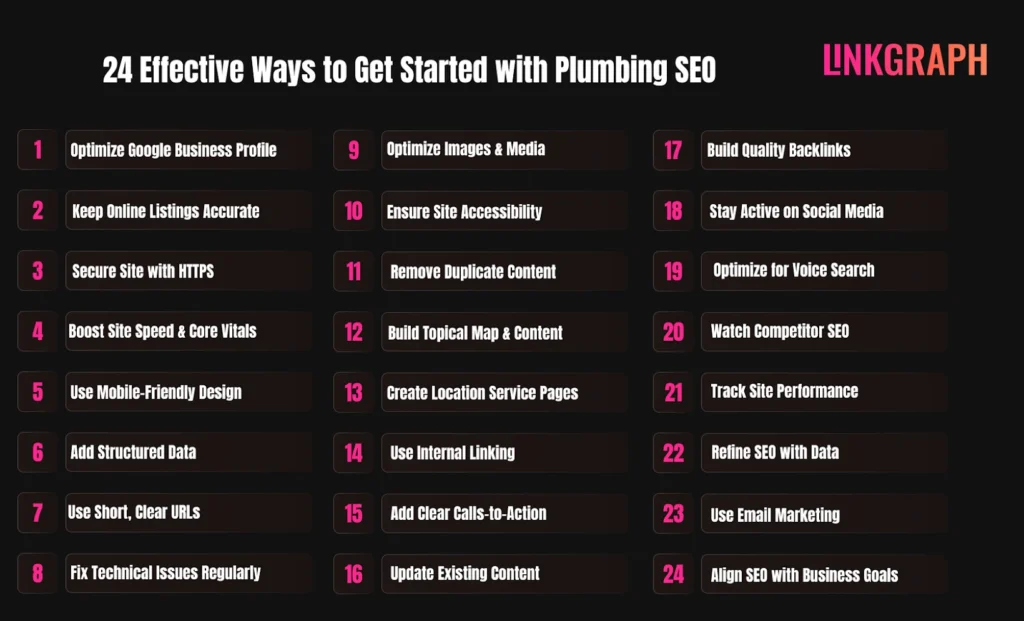
The best ways to get started with plumbing SEO involve building a strong online presence, targeting the right topics, and optimizing a website for both users and search engines. Each step creates a foundation that supports higher visibility, stronger reputation, and sustainable growth. There are 24 most effective ways to get started with plumbing SEO.
The 24 most effective ways to get started with plumbing SEO have been listed below.
1. Set Up and Optimize Your Google Business Profile
2. Ensure Consistent and Accurate Online Business Listings
3. Secure Your Website with HTTPS
4. Improve Website Speed and Core Web Vitals.
5. Ensure Mobile Friendly, Responsive Web Design
6. Implement Structured Data
7. Keep URLs Short and Topic Focused
8. Regularly Audit and Fix Technical Issues
9. Optimize Images and Multimedia
10. Ensure Website Accessibility
11. Resolve Duplicate Content Issues
12. Create Topical Map and Publish Helpful Plumbing Content
13. Create Dedicated Service Pages
14. Use Strategic Internal Linking
15. Provide Clear, Compelling Calls-to-Action
16. Consistently Refresh and Update Existing Content
17. Build High Quality, Relevant Backlinks
18. Maintain Active Social Media Presence
19. Optimize Content for Voice Search
20. Monitor Competitor SEO Strategies
21. Track Website Performance
22. Continually Refine SEO Strategy Based on Performance Data
23. Leverage Email Marketing
24. Align SEO Efforts with Your Long-Term Business Goals
Plumbing SEO requires ongoing effort across multiple areas of optimization. By following these steps, plumbing businesses create a structured strategy that drives local visibility, qualified leads, and sustainable growth. We have broken down the 24 effective ways to get started with plumbing SEO below.
1. Set Up and Optimize Your Google Business Profile (GBP)
Google Business Profile is a free tool that allows plumbing services to manage presence on Google Search and Maps. The profile displays address, phone, hours, categories, services, photos, reviews, posts, and descriptions. A complete profile improves visibility in local searches and increases engagement.
An optimized profile helps a plumbing service appear in the local map pack, a prime placement for search terms such as plumber near me. Ranking factors include proximity, relevance, and prominence. Reviews, accurate information, and profile activity influence these signals. A verified and updated profile provides trust to both search engines and users.
Setup begins by claiming and verifying the profile. Accurate name, address, and phone details must match across all listings. Categories define the business as Plumber and include relevant secondary services. Service areas outline covered locations. A keyword-rich description highlights specialties such as emergency plumbing. High-quality photos of staff, equipment, and job sites enhance profile strength. Posts share updates or promotions, keeping the profile active. Reviews gathered through follow-ups by email or text strengthen trust and improve rankings.
Optimization impacts ranking by improving local authority and increasing profile relevance. Correct categories, consistent information, and active updates drive higher placements. A Miami example features the description “Licensed plumber in Miami offering leak detection and water heater repair.” A fully optimized profile leads to more calls, website visits, and inquiries.
A quick practice is reviewing monthly insights to track search terms. Update descriptions and add Q&A responses to target real customer needs.
2. Ensure Consistent and Accurate Online Business Listings (NAP)
Name, Address, Phone (NAP) consistency refers to matching business information across all online listings. Plumber profiles on Google, Yelp, Bing, and directories must share identical contact details.
NAP consistency matters because search engines rely on uniform data to confidently match local plumbers with search intent. Inconsistent NAP data creates confusion and reduces visibility in local search and map pack results. Plumbing services with matching NAP across web platforms improve authority signals and trust, strengthening ranking potential.
To achieve consistency, audit all existing listings and citations. Confirm information on a website footer, contact page, social pages, and major directories aligns exactly. Use identical formatting for address, suite number, phone number style, and legal name. Tools such as Moz Local, BrightLocal, or Yext help identify and correct inconsistencies. Review listings regularly to maintain accuracy whenever updates occur.
Consistent NAP impacts ranking by signaling legitimacy and reliability. Matching data across citations establishes trust and helps algorithms connect signals for local relevance and prominence. This alignment supports higher placement in both map pack and organic search results for local terms such as plumber near me.
A practical example involves a plumbing service auditing directory listings across Bing Places, Yelp, and trade directories. Correcting mismatches, such as phone format or suite abbreviation, produces stronger local visibility. Expected results include higher map rankings, increased visibility, and more customer inquiries.
A quick tip is to embed NAP in structured data markup on every webpage. This reinforces accuracy for search engines and improves results in voice search queries.
3. Secure Your Website with HTTPS (SSL Certificate)
Name of a secure site using HTTPS signals website encryption and authentication. An SSL certificate enables that encrypted connection. A homepage and service pages use HTTPS protocol protection.
Website security matters for plumbing websites. Visitors trust a padlock icon and “https://”. That trust increases engagement and lowers bounce rate. Search engines favour HTTPS sites and rank them higher due to improved safety signals. Trust signals work as small ranking advantage that grows over time.
Address this by obtaining an SSL certificate. Choose a certificate type such as domain validation or extended validation depending on desired trust level. Host provider often includes SSL tools. Install certificate via hosting control panel or CMS plugin. Set permanent 301 redirects from HTTP to HTTPS. Update internal links, images, and scripts to use secure URLs. Verify HTTPS property in search tools and monitor certificate expiry.
Secure site configuration improves ranking by boosting local authority and trustworthiness. Secure URLs preserve referral data in analytics. Secure setup enables access to advanced search tools and improves data accuracy. Local SEO signals such as structured data benefit from verified HTTPS pages.
A practical example involves a plumbing website provider using Let’s Encrypt for a free SSL certificate. The provider installs certificate, forces redirect, and updates site content links. Search console shows reduction of mixed‑content errors. Visibility in local organic and map search results often improves.
Expected result includes increased search ranking, higher click‑through rates, enhanced user trust, and preserved referral traffic. A long‑term benefit includes stable visibility and reduced analytics errors. A quick best practice is to schedule monthly SSL expiry checks and test site security via online SSL tools.
4. Improve Website Speed and Core Web Vitals
Website speed and Core Web Vitals describe performance signals that measure loading, interactivity, and stability. Three main metrics include Largest Contentful Paint, Interaction to Next Paint, and Cumulative Layout Shift. These indicators define how quickly a page loads, how fast it responds to clicks, and how stable its layout appears.
Core Web Vitals hold importance for plumbing websites because visitors expect fast, responsive, and stable pages. A site that loads slowly frustrates users and drives them away. Improved speed creates better user experience, reduces bounce rate, and increases engagement. Search engines evaluate these signals as ranking factors, meaning a fast and stable plumbing site has higher visibility.
Targets include Largest Contentful Paint under 2.5 seconds, Interaction to Next Paint below 200 milliseconds, and Cumulative Layout Shift below 0.1. Achieving these targets requires compressing images, minifying code, enabling browser caching, reducing server response time, and removing unnecessary scripts. Tools such as PageSpeed Insights, Lighthouse, and Search Console provide clear reports and suggestions.
Performance optimization impacts ranking by acting as a competitive advantage. Plumbing websites that meet benchmarks often earn stronger placement in search results and local map listings. These improvements increase trust, retain visitors longer, and generate more service calls.
An example involves a plumbing site switching to compressed images and lazy loading, which improved load time and stabilized layout. The site then recorded lower bounce rates and more form submissions. A good practice is scheduling regular audits in Search Console to track performance trends and maintain improvements.
5. Ensure Mobile Friendly, Responsive Web Design
Responsive, mobile‑friendly design refers to website layouts that adapt fluidly across devices. This approach uses flexible grids, fluid images, and CSS media queries so that content displays properly on any screen size.
Responsive design matters for plumbing websites because most searches for plumbing services happen on mobile devices. Visitors expect readable text, tap‑friendly buttons, and easy navigation. A site that adjusts to screen size reduces bounce rates, engages visitors longer, and supports conversions such as calls or form submissions.
A plumbing website implements a responsive framework or theme. Navigation menus are simple and easy to tap. Call-to-action buttons appear prominently near the top of each page. Mobile users benefit from click-to-call links and fast access to service pages. Font sizes are large enough to read, and spacing prevents accidental taps. Verification tools like Google Mobile-Friendly Test and PageSpeed Insights help ensure compliance.
Responsive design affects ranking because Google uses mobile‑first indexing, where the mobile version of a site is primary for indexing and ranking. Plumbing websites optimized for mobile earn stronger positions in local map packs and organic results. Improved usability keeps visitors longer on pages, reduces bounce rates, and signals quality to search engines.
An example involves a plumbing service adopting a responsive WordPress template with simplified menu, large clickable buttons, and streamlined service pages. Mobile visitors navigate quickly and book services more often.
Expected results include stronger visibility, better engagement metrics, increased calls, and improved customer trust. A best practice is to test design monthly with mobile‑friendly tools and refine layouts for new devices.
6. Implement Structured Data (Schema Markup)
Structured data, also known as schema markup, is code added to a website that helps search engines understand content context better. This markup uses a standardized vocabulary to label business details, services, reviews, and location information.
Implementing structured data is important for plumbing websites because it enhances search result listings with rich snippets such as ratings, contact details, service hours, and FAQs. These rich snippets increase click-through rates and improve user trust. Search engines favor websites with clear, structured data by showing enhanced listings that stand out in local and organic search results.
To implement structured data, plumbers add JSON-LD schema markup to relevant pages. Key schema types include LocalBusiness, PlumbingService, Review, and FAQPage. Markup must be accurate, complete, and follow Google structured data guidelines. Tools like Google Structured Data Markup Helper or Schema.org provide guidance and testing features. After implementation, use Google Rich Results Test and Search Console to verify proper indexing.
Structured data impacts ranking indirectly by increasing visibility and attracting more clicks through enhanced results. It helps search engines better associate content relevance and improves eligibility for features like knowledge panels and voice search answers.
A practical example involves a plumbing business marking up service pages with PlumbingService schema, embedding customer reviews with Review schema, and creating FAQ sections with FAQPage schema. This leads to rich results showing star ratings, service details, and quick answers in search listings.
Expected improvements include higher click-through rates, better search appearance, increased local search prominence, and long-term growth in qualified leads. A quick tip is to regularly audit schema markup to prevent errors that cause search engines to ignore the data.
7. Keep URLs Short and Topic Focused
URLs are the web addresses that lead users and search engines to specific pages. Keeping URLs short and focused means using clear, concise keywords that reflect the main topic of the page without unnecessary words or clutter.
Short, topic-focused URLs matter for plumbing websites because search engines read URLs first when crawling and indexing content. Clear URLs signal the page subject, helping search engines understand relevance quickly. Long or complicated URLs confuse algorithms and slow indexing. Simple URLs improve user experience by making links easier to read and share.
To keep URLs short, choose main keywords related to the page topic and avoid stop words, dates, or special characters. Use hyphens to separate words for readability. For example, a page about leak repair should have a URL like /leak-repair rather than /services/leak-repair-emergency-plumbing-2025. Avoid duplicating entire page titles as URLs.
Short URLs improve ranking by enabling faster indexing and clearer association between URL and content. They help search engines categorize pages more efficiently and enhance snippet display in search results. Cleaner URLs increase click-through rates by appearing more trustworthy and relevant to users.
Tools such as Google Search Console and Screaming Frog help audit URLs for length and structure. Content management systems often allow URL editing before publishing.
A practical example includes a plumber creating service pages with URLs like /water-heater-installation and /drain-cleaning. These concise URLs appear in search results and maps, making them easy to recognize and click.
Expected results include faster indexing, better rankings, improved user trust, and higher traffic. A quick tip is to review URLs periodically and simplify any that become overly long or complex.
8. Regularly Audit and Fix Technical Issues (e.g., Broken Links, Errors)
Regularly auditing and fixing technical issues involves checking a website for problems like broken links, crawl errors, slow-loading pages, and faulty redirects. This process ensures the site functions smoothly for both users and search engines.
Technical health matters for plumbing websites because errors harm user experience and reduce search engine trust. Broken links frustrate visitors and cause search engines to waste crawl budget on dead ends. Slow pages and incorrect redirects lead to lower rankings and fewer leads.
To address these issues, run frequent site audits using tools such as Google Search Console, Screaming Frog, or Semrush. Identify broken links, 404 errors, duplicate content, and slow-loading pages. Fix broken links by updating or removing them. Correct redirects to point to relevant pages. Improve page speed by optimizing images and server response. Monitor crawl stats and resolve reported errors regularly.
Maintaining a technically sound site impacts rankings by improving crawl efficiency and user satisfaction. Search engines reward well-functioning sites with better indexation and higher positions in search results. A clean site also reduces bounce rates and increases conversion chances.
A practical example includes a plumbing website that found multiple broken links in service pages using Screaming Frog. After fixing these links and speeding up load times, the site saw improved crawl rates and a rise in search visibility.
Expected results include faster indexing, higher rankings, enhanced user experience, and increased traffic. A best practice is scheduling monthly audits and promptly addressing all reported technical errors.
9. Optimize Images and Multimedia (Alt Text, File Size)
Optimizing images and multimedia involves reducing file sizes for faster loading and adding descriptive alt text for accessibility and SEO. Proper optimization improves site performance and helps search engines understand visual content.
For plumbing websites, image optimization is crucial because pages often contain many photos of projects, tools, and teams. Large files slow page speed, causing visitors to leave. Descriptive alt text ensures images rank in visual search results and supports users who rely on screen readers.
To optimize images, compress files using tools like TinyPNG or ImageOptim without losing quality. Convert images to modern formats such as WebP for better compression. Add clear, keyword-relevant alt text describing image content, such as “leak repair service by plumber.” Use descriptive file names with target keywords and avoid generic labels like IMG1234.jpg.
Optimized images impact ranking by improving page load speed, a key ranking factor. Fast-loading pages enhance user experience and reduce bounce rates. Alt text provides additional keyword context, helping search engines index images and improve overall relevance.
A practical example includes a plumbing site replacing large JPEGs with compressed WebP images and adding alt text like “emergency pipe repair in kitchen.” This resulted in faster page loads and higher traffic from image search.
Expected improvements include faster page speed, better search rankings, improved accessibility, and increased user engagement. A quick tip is to automate image compression during upload using plugins like ShortPixel or Smush for WordPress sites.
10. Ensure Website Accessibility (ADA Compliance)
Website accessibility means designing and developing sites that all users access, including people with disabilities. ADA compliance refers to meeting standards set by the Americans with Disabilities Act to ensure equal access.
Accessibility is important for plumbing websites to reach a broader audience, including users with visual, auditory, or motor impairments. An accessible site improves user experience, increases engagement, and avoids legal risks from non-compliance. Search engines favor accessible sites since they provide clear structure and better content understanding.
To ensure accessibility, include features such as keyboard navigation, text alternatives for images, sufficient color contrast, and properly labeled form fields. Use semantic HTML tags and ARIA attributes to help screen readers interpret content. Test websites using tools like WAVE, Axe, or Google Lighthouse. Fix detected issues promptly.
Accessibility impacts ranking by enhancing user experience and providing clearer site structure, which search engines reward. Accessible content appear in voice search results and assistive technology queries. Compliant sites reduce bounce rates and improve session duration, signaling quality to search engines.
A practical example involves a plumbing website adding alt text to images, enabling keyboard navigation, and improving color contrast. These changes led to better usability and increased visitor retention.
Expected results include higher search rankings, wider audience reach, lower legal risk, and improved brand reputation. A quick tip is to perform regular accessibility audits and train content creators on inclusive practices.
11. Resolve Duplicate Content Issues
Duplicate content occurs when identical or very similar content appears on multiple URLs within a website or across different sites. Resolving these issues ensures search engines index the preferred version without confusion.
For plumbing websites, duplicate content arises from multiple service pages with overlapping text, printer-friendly versions, or URL parameters creating variations. Duplicate content reduces search engine trust and splits ranking signals, lowering overall visibility.
Address this by conducting a thorough site audit to identify duplicate pages using tools like Screaming Frog or Semrush. Implement canonical tags to indicate the primary version of content. Use 301 redirects to consolidate duplicate URLs where appropriate. Avoid copying content across pages and create unique, localized content for service areas. Regularly review CMS settings to prevent automatic duplication.
Resolving duplicate content improves ranking by consolidating link equity and signals to one URL, preventing dilution. Clear, unique content helps search engines determine page relevance and rank it higher. Eliminating duplicates speeds indexing and improves crawl efficiency.
A practical example is a plumbing website that found duplicate service descriptions on city-specific pages. After rewriting unique content and setting canonical URLs, the site gained higher rankings in local search.
Expected results include faster indexing, improved rankings, stronger domain authority, and better user experience. A quick tip is to maintain a consistent URL structure and monitor for duplicates regularly using SEO audit tools.
12. Create Topical Map and Publish Helpful, Authoritative Plumbing Content
A topical map organizes website content into clusters around central themes and related subtopics. This structure connects pages through internal links, creating a clear hierarchy and improving user navigation.
For plumbing websites, creating a topical map helps cover all relevant service areas and common customer questions comprehensively. This approach signals to search engines that the site offers authoritative and well-organized information about plumbing services.
To build a topical map, identify core topics like drain cleaning, water heater repair, or emergency plumbing. Develop supporting content such as blog posts, FAQs, and service pages related to each core topic. Use strategic internal linking from subtopics back to main pages. Tools like Ahrefs, SEMrush, or Surfer SEO assist in keyword research and content gap analysis.
Implementing a topical map improves ranking by demonstrating topical authority and relevance. Search engines better understand site structure, boosting visibility for both broad and specific queries. This also enhances user experience by making it easier to find relevant information, reducing bounce rates.
A practical example involves a plumbing company creating main service pages for key offerings and publishing helpful articles on maintenance tips, common problems, and local plumbing regulations. Internal links connect these resources, improving crawl efficiency and user engagement.
Expected results include stronger keyword rankings, increased organic traffic, and higher conversion rates. A quick tip is to update the topical map regularly to reflect new services or trending plumbing topics.
13. Create Dedicated Plumbing Service Pages for Important Locations
Creating dedicated service pages for important locations means building separate pages that target specific geographic areas where plumbing services are offered. Each page highlights services available in that location, including local keywords and unique content.
This strategy is crucial for plumbing websites because local search drives most service inquiries. Location-specific pages help search engines match queries like “plumber in [city]” or “emergency plumbing [neighborhood]” with relevant results. Generic service pages fail to capture this local intent effectively.
To implement, identify key service areas and create individual pages tailored to each. Include local keywords naturally in titles, headings, and content. Add details about area plumbing challenges, customer testimonials from that location, and contact information. Use keyword research tools to research local search terms. Link these pages internally from the homepage or main service pages.
Dedicated location pages impact rankings by increasing relevance for local searches and improving visibility in Google local pack and organic results. These pages drive more qualified traffic by addressing specific community needs and building trust through localized content.
A practical example is a plumbing company creating pages for “Boston emergency plumbing” and “Cambridge drain cleaning,” with unique content and reviews for each area. This led to higher rankings and increased calls from local customers.
Expected results include stronger local search presence, increased site traffic, better lead quality, and more booked service calls. A quick tip is to avoid duplicate content by customizing each page with distinct information and customer stories.
14. Use Strategic Internal Linking (Root, Seed, Node)
Strategic internal linking organizes website pages into a hierarchy using root, seed, and node pages. The root page acts as the main homepage or category page. Seed pages cover broad topics linked from the root, while node pages focus on detailed subtopics linked from seed pages.
This structure matters for plumbing websites because it helps distribute page authority and guides users through relevant content smoothly. Proper internal linking improves crawlability and helps search engines understand site theme and content relationships.
To implement strategic linking, map out core topics and subtopics. Link from homepage (root) to main service pages (seed) and then to more specific pages (nodes), such as individual plumbing services or blog posts. Use clear anchor text relevant to the linked page topic. Use a site auditor tool to help analyze existing link structures and identify gaps.
Internal linking boosts rankings by spreading link equity across important pages and signaling content relevance. It enhances user experience by making navigation intuitive and keeping visitors engaged longer, reducing bounce rates.
A practical example includes a plumbing site linking the homepage to drain cleaning and water heater service pages. Those pages then link to blog posts about common issues, maintenance tips, and troubleshooting guides, creating a clear content path.
Expected results include improved page authority, better crawl efficiency, higher search rankings, and increased user engagement. A quick tip is to avoid excessive linking and focus on relevant, natural anchor text.
15. Provide Clear, Compelling Calls-to-Action (CTAs)
Calls-to-action (CTAs) are clear, persuasive prompts that guide website visitors to take desired actions such as calling, booking, or requesting a quote. Effective CTAs use concise language and strong visual cues to capture attention and encourage engagement.
For plumbing websites, clear CTAs are crucial because they convert visitors into leads and customers. Many visitors arrive seeking urgent help or service information, so directing them quickly improves conversion rates and business growth.
To create strong CTAs, place them prominently above the fold and at key points within the content. Use action verbs like “Call Now,” “Request a Free Estimate,” or “Schedule Service Today.” Design buttons with contrasting colors and readable fonts. Ensure CTAs work well on both desktop and mobile devices. Test different wording and placements using A/B testing tools such as Google Optimize or Hotjar.
CTAs impact ranking indirectly by increasing user engagement signals such as longer sessions, lower bounce rates, and higher conversion rates. Search engines interpret these as indicators of valuable content, potentially improving rankings.
A practical example is a plumbing website featuring a bright “24/7 Emergency Service – Call Now” button on every page header. This boosted phone inquiries and appointment bookings significantly.
Expected improvements include more leads, higher customer interaction, and increased revenue. A quick tip is to keep CTAs simple, avoid overwhelming visitors with too many options, and regularly update text to reflect seasonal offers or new services.
16. Consistently Refresh and Update Existing Content
Refreshing and updating existing content means regularly reviewing website pages and improving them with new information, updated facts, and enhanced keywords. This keeps the content relevant and valuable over time.
This practice is important for plumbing websites because the industry and customer needs change. Updated content reflects current services, pricing, technologies, and local regulations. Search engines favor fresh content, as it signals an active and trustworthy site.
To refresh content, audit pages periodically using tools like Google Analytics and Search Console to identify underperforming pages. Add new details, fix outdated information, improve readability, and insert updated keywords based on recent research. Enhance content with new images, videos, or FAQs. Remove irrelevant or thin content.
Content updates impact rankings by increasing relevance and user engagement. Fresh content reclaims lost rankings or boosts pages that stagnated. Search engines reward active sites with more frequent crawling and indexing, improving visibility.
A practical example involves a plumbing business updating blog posts yearly with new plumbing codes and seasonal maintenance tips. This resulted in increased organic traffic and better local search performance.
Expected results include improved rankings, higher traffic, longer visitor sessions, and more leads. A quick tip is to schedule content reviews quarterly and prioritize updates on high-value pages to maximize SEO benefits.
17. Build High Quality, Relevant Backlinks through Authoritative Content
Building high-quality, relevant backlinks means earning links from authoritative websites that point to a plumbing site. These backlinks act as endorsements, signaling trust and authority to search engines.
Backlinks matter for plumbing websites because they increase domain authority and improve search rankings. Links from reputable sources like industry blogs, local business directories, and news sites boost credibility and drive referral traffic. Plumbing sites with strong backlink profiles rank higher for competitive keywords.
To build backlinks, create authoritative content such as how-to guides, case studies, or industry insights that others want to reference. Reach out to local partners, suppliers, or community organizations for link opportunities. Use guest posting on relevant sites to showcase expertise and gain links. Monitor backlink profiles with tools like Ahrefs, Moz, or SEMrush to track quality and disavow harmful links.
Backlinks impact rankings by increasing trustworthiness and relevance signals. Search engines view linked content as valuable, which helps plumbing websites rank higher in organic search. Quality links also attract referral visitors who become customers.
A practical example includes a plumbing company publishing a detailed guide on common pipe issues. Local home improvement blogs linked to this guide, resulting in higher traffic and improved search positions.
Expected benefits include stronger domain authority, better keyword rankings, increased website traffic, and higher lead generation. A quick tip is to focus on earning links naturally through useful, original content rather than buying or spamming links.
18. Maintain Active Social Media Presence to Increase Brand Awareness
Maintaining an active social media presence involves regularly posting, engaging with followers, and sharing relevant content on platforms like Facebook, Instagram, and LinkedIn. This builds brand visibility and connects with potential customers.
For plumbing websites, social media helps reach local audiences and showcase services, completed projects, and customer testimonials. Active profiles increase brand awareness, making the business more recognizable when users search for plumbing services. Social engagement signals drive traffic to the website and improve local SEO.
To maintain activity, create a content calendar with posts about tips, promotions, before-and-after photos, and community involvement. Respond promptly to comments and messages to foster trust. Use scheduling tools like Buffer or Hootsuite to streamline posting. Collaborate with local influencers or businesses to expand reach.
Social media impacts ranking indirectly by increasing brand searches, referral traffic, and user engagement. Higher brand awareness leads to more branded searches, which search engines view as a sign of authority. Sharing website links on social platforms generates backlinks and improves referral traffic.
A practical example is a plumbing company posting weekly maintenance tips and customer success stories on Instagram. This led to more followers, increased website visits, and higher lead generation.
Expected improvements include stronger brand recognition, increased website traffic, and better customer relationships. A quick tip is to focus on consistent posting and authentic engagement rather than volume.
19. Optimize Content for Voice Search Queries
Optimizing content for voice search means tailoring website text to match how people speak when using voice assistants like Siri, Alexa, or Google Assistant. This includes using natural language, question phrases, and conversational keywords.
For plumbing websites, voice search optimization is vital because many users request immediate help or local services hands-free, often using mobile devices. Voice queries tend to be longer and more specific, so content must answer common questions clearly and directly to appear in voice search results.
To optimize, focus on including question-based keywords such as “how to fix a leaking pipe” or “best emergency plumber near me.” Use natural, conversational language in headings and content. Incorporate FAQs that address common plumbing problems. Ensure pages load fast and use structured data to help search engines extract precise answers.
Optimizing for voice search benefits rankings by capturing a growing segment of local, intent-driven traffic. Voice queries often trigger featured snippets or quick answers, increasing visibility. Voice-friendly content improves user experience and helps secure more qualified leads.
A practical example involves a plumbing company creating an FAQ page answering questions about common issues and service availability. This resulted in appearing in voice search snippets and increased calls from mobile users.
Expected results include higher local search rankings, increased mobile traffic, and better lead generation. A quick tip is to regularly update FAQs based on new voice search trends and customer questions.
20. Monitor Competitor SEO Strategies Regularly
Monitoring competitor SEO strategies means regularly analyzing how other plumbing businesses optimize websites, content, and online presence to rank well in search engines. This involves tracking keywords, backlinks, content updates, and technical SEO tactics.
For plumbing websites, understanding competitor SEO helps identify strengths, weaknesses, and opportunities. It reveals effective approaches in local markets, allowing strategy adjustments to remain competitive. Without monitoring, a site risks falling behind or missing trends that drive traffic.
To monitor competitors, use tools like SEMrush, Ahrefs, or Moz to track keyword rankings, backlink profiles, and top-performing pages. Analyze content topics, site structure, and user engagement. Identify gaps where competitor content performs better and create superior, more comprehensive pages. Observe social media activity and review patterns as well.
Regular competitor analysis benefits rankings by informing strategy refinement and spotting new keyword opportunities. It helps avoid stagnation and improves adaptability to changing search engine algorithms and customer behavior.
A practical example involves a plumbing business discovering a competitor ranks higher for “tankless water heater repair.” After analyzing competitor content and backlinks, the business created a detailed service page and earned relevant backlinks, gaining better rankings.
Expected results include improved keyword rankings, higher organic traffic, and stronger market positioning. A quick tip is to set up alerts for competitor website changes and review reports monthly to stay updated.
21. Track Website Performance Using Analytics and Google Search Console
Tracking website performance involves using tools like Google Analytics and Google Search Console to measure traffic, user behavior, and search visibility. These tools provide data on how visitors interact with the site and how it ranks for targeted keywords.
For plumbing websites, monitoring performance helps identify which pages attract the most visitors and where users drop off. This insight allows optimizing content and site structure to improve user experience and increase conversions. Tracking search queries reveals opportunities to target high-potential keywords.
To track performance, set up Google Analytics to monitor metrics like sessions, bounce rate, and conversion goals. Use Google Search Console to analyze search impressions, click-through rates, and indexing status. Regularly review reports to detect technical issues, traffic trends, and ranking changes. Tools like Data Studio visualize data for easier interpretation.
Website performance tracking impacts ranking by enabling data-driven decisions. Optimizing based on user behavior and search data improves site relevance, user engagement, and overall SEO effectiveness. Search engines reward websites that deliver positive user experiences and meet search intent.
A practical example includes a plumbing site identifying high bounce rates on a service page. After improving content and adding clear calls-to-action, engagement increased, resulting in better rankings and more leads.
Expected results include enhanced site usability, improved search rankings, increased organic traffic, and higher conversion rates. A quick tip is to set monthly performance review sessions to adjust strategies promptly.
22. Continually Refine SEO Strategy Based on Performance Data
Continually refining an SEO strategy means regularly analyzing performance data and making adjustments to improve search rankings and user engagement. This process involves reviewing keyword success, content effectiveness, technical health, and backlink quality to optimize ongoing efforts.
For plumbing websites, refining SEO is crucial due to frequent updates in search engine algorithms and shifting customer behaviors. Plumbing services face seasonal demand changes or new local competitors, making constant adaptation necessary to maintain and grow online visibility.
To refine SEO strategy, use data from tools like Google Analytics and Search Console to track key metrics such as traffic sources, bounce rates, and keyword rankings. Identify underperforming pages or keywords and adjust content, meta tags, or technical elements accordingly. Monitor competitors to stay ahead. Implement A/B testing to evaluate changes and use insights to guide decisions.
Regular refinement benefits rankings by ensuring the site remains relevant and aligned with search intent. It improves user experience and helps capture emerging search trends, increasing organic traffic and conversions.
A practical example involves a plumbing company noticing a drop in traffic for a key service page. After updating content and optimizing for new keywords found through analysis, rankings recovered and lead generation improved.
Expected results include sustained or improved search visibility, better user engagement, and higher return on SEO investment. A quick tip is to schedule quarterly SEO reviews to maintain a proactive approach.
23. Leverage Email Marketing for Customer Engagement and Retention
Email marketing involves sending targeted messages to customers and prospects to build relationships, share updates, and promote services. It keeps a plumbing business top of mind and encourages repeat business.
For plumbing websites, email marketing supports customer engagement and retention by delivering useful content such as maintenance tips, special offers, and appointment reminders. Engaged customers are more likely to book services again and refer others, increasing revenue without high advertising costs.
To leverage email marketing, collect email addresses through website sign-ups, service appointments, or promotions. Use email platforms like Mailchimp or Constant Contact to segment audiences and personalize messages. Send regular newsletters, seasonal reminders, and exclusive discounts. Automate follow-ups after service completion to request reviews or offer maintenance tips.
While email marketing does not directly impact search rankings, it drives traffic to the website, increases brand awareness, and generates social shares and backlinks. These factors indirectly support SEO efforts by enhancing visibility and reputation.
A practical example is a plumbing business sending monthly emails with tips for winter pipe care and exclusive discounts on inspections. This approach increased customer retention and generated more referrals.
Expected benefits include stronger customer relationships, increased repeat bookings, and improved revenue. A quick tip is to keep emails concise, valuable, and easy to act on, avoiding overly frequent messaging that might annoy recipients.
24. Align SEO Efforts with Your Long-Term Business Goals
Aligning SEO efforts with long-term business goals means tailoring optimization strategies to support overall growth plans, service expansion, and brand positioning. This ensures SEO activities contribute directly to sustainable success rather than short-term wins.
For plumbing websites, aligning SEO with business goals is vital to attract the right customers, expand service areas, or promote new offerings. Without this alignment, SEO drives traffic that does not convert or focus on irrelevant keywords, wasting resources.
To align SEO, start by defining clear business objectives such as increasing residential leads, targeting commercial clients, or entering new local markets. Conduct keyword research and content planning based on these goals. Regularly review SEO performance and adjust tactics to stay on track. Use tools like Google Analytics and Search Console to monitor traffic quality and conversions. Collaborate with stakeholders to ensure SEO supports marketing, sales, and operational priorities.
This alignment benefits rankings by improving keyword relevance and user engagement, which signals value to search engines. It increases return on investment by attracting qualified leads that support growth plans.
A practical example includes a plumbing company aiming to expand into commercial services. SEO efforts focused on commercial plumbing keywords and dedicated service pages, resulting in higher rankings and new business contracts.
Expected improvements include better targeting, increased qualified traffic, stronger brand authority, and higher revenue growth. A quick tip is to document SEO goals alongside business plans and revisit them quarterly for updates.
When Is the Best Time for Plumbers to Get Started With SEO?
The best time for plumbers to get started with SEO is immediately. SEO is a long-term strategy that requires consistent effort before results appear. Starting early allows building a strong online presence ahead of competitors, capturing local search traffic, and establishing authority in the market.
Plumbing services often face urgent customer needs, so appearing in local search results quickly drives valuable leads. Early SEO work helps secure top rankings for keywords like “emergency plumber near me” or “24-hour plumbing services.” Delaying SEO allows competitors to dominate search results, making it harder and more expensive to catch up later.
Seasonal trends also affect timing. Plumbing demands rise in colder months due to frozen pipes or during home renovation seasons. Starting SEO well before these peaks ensures visibility when potential customers search most.
For example, a plumbing business that began SEO six months before winter gained top local rankings for frozen pipe repairs and booked more service calls than competitors starting later.
Consensus from industry experts and digital marketing sources emphasizes beginning SEO as soon as possible to build momentum and avoid missed opportunities. Waiting to invest in SEO risks losing market share and falling behind in an increasingly digital marketplace.
Starting SEO immediately gives the best chance to grow traffic, leads, and revenue steadily over time. Regular updates and strategy adjustments maximize results as the business evolves.
How Long Does It Take for SEO to Start Working for a Plumber?
SEO for a plumber typically starts showing noticeable results within three to six months. This timeframe depends on factors such as website age, competition level, keyword difficulty, and the consistency of optimization efforts. SEO requires time because search engines need to crawl, index, and evaluate website changes before adjusting rankings.
Search engines assess many signals, including site authority, content relevance, backlinks, and user experience. Building authority and trust takes time, especially in competitive local markets where many plumbing businesses compete for the same keywords. Consistent content updates, technical improvements, and backlink building gradually improve search visibility.
New websites or those with limited history take longer to rank well because search engines have less trust in them initially. Established sites with some authority might see quicker gains. High-competition keywords, like “emergency plumber,” require more effort and time compared to less competitive, niche terms.
For example, a plumber optimizing a website in a crowded city sees initial improvements in three months but requires six months or more to reach top local rankings. Meanwhile, a plumber targeting a smaller town with less competition achieves results faster.
Industry consensus from SEO experts agrees that patience and ongoing effort are essential. SEO is not instant; it is a gradual process that builds sustainable organic traffic. Regular monitoring and adjustments help accelerate progress and maintain growth.
Is GMB Optimization Enough for Plumbers to Get Consistent Leads?
GMB optimization plays a vital role in local SEO by increasing visibility in local search results and the map pack. It helps plumbers appear in nearby searches and builds trust through reviews and accurate business information. However, relying on GMB alone limits lead generation potential.
A fully optimized website is essential to convert visitors into customers. Websites must have clear service pages, fast loading times, mobile-friendly design, and strong calls to action to capture and convert traffic effectively. Combining GMB with comprehensive website SEO including local citations, quality backlinks, and valuable content improves overall rankings and user experience.
For example, plumbers with strong GMB profiles but poor websites get some calls but lose many potential leads. Those investing in both GMB and website SEO achieve higher search rankings, increased website traffic, and more consistent lead flow.
In summary, GMB optimization benefits local SEO but does not replace the need for proper website optimization. Both must work together to generate steady leads and support long-term growth.
Which Online Directories Are Most Valuable for Plumbers to Be Listed In?
Plumbers benefit greatly from being listed in reputable online directories. These directories improve local SEO, increase online visibility, and help attract potential customers searching for plumbing services. Accurate and consistent listings across multiple platforms build trust with search engines and users alike.
- Google Business Profile: This directory is the most important for local SEO. It displays essential business information in Google Search and Maps, helping plumbers appear in local search results and the map pack.
- Yelp: Yelp is a popular review platform where customers often search for local service providers. Positive reviews here boost reputation and attract more leads.
- Bing Places: Bing Places helps capture traffic from Bing search users. While smaller than Google, Bing still drives significant local search volume.
- Apple Maps: Apple Maps is the default map app for iOS devices. Being listed ensures visibility to mobile users, especially on iPhones and iPads.
- Angi: Angi (formerly Angie’s List) specializes in home services. Plumbers listed here reach homeowners actively looking for trusted service providers.
- HomeAdvisor: HomeAdvisor connects homeowners with local professionals. Listing on this site increases exposure to targeted, ready-to-hire customers.
- Your local chamber of commerce: Being listed in the chamber’s directory builds local credibility and networking opportunities, which also enhance SEO.
- Nextdoor: Nextdoor is a neighborhood-based social network where local service recommendations thrive. Listing here helps plumbers gain word-of-mouth referrals within communities.
Listing in these directories ensures broad coverage, boosts local SEO, and increases chances of attracting qualified plumbing leads.
Is It Possible for Plumbers to Implement SEO Strategies on Their Own?
Plumbers are able to implement basic SEO strategies on their own, but achieving strong, consistent results often requires professional expertise. Simple tasks like setting up a Google Business Profile, ensuring accurate online listings, and adding relevant keywords to website content are manageable without specialized skills.
However, effective SEO involves complex elements such as technical website audits, structured data implementation, backlink building, and competitive analysis. These require experience and ongoing effort to navigate search engine algorithms and industry best practices.
DIY SEO produces some improvements, but without deep knowledge, plumbers risk missing critical optimizations or making errors that hurt rankings. Hiring SEO professionals ensures a comprehensive, strategic approach that adapts to changing algorithms and market conditions.
Who Offers the Best SEO Services for Plumbers in the United States?
LinkGraph offers some of the best SEO services for plumbers in the United States, backed by proven success and deep industry expertise. The company provides comprehensive SEO solutions tailored specifically for plumbing businesses, including on-page optimization, local SEO, link building, and targeted content strategies.
Case studies demonstrate significant improvements in local visibility and customer inquiries for plumbing clients, highlighting measurable results. Client testimonials praise LinkGraph for delivering value and consistent performance, reinforcing its reputation as a trusted SEO provider.
Industry recognition and positive reviews confirm effectiveness of LinkGraph tools and services. Plumbers aiming to improve search rankings and attract more leads benefit from LinkGraph data-driven approach and customized SEO campaigns.
This combination of proven results, client satisfaction, and specialized focus makes LinkGraph a top choice for plumbing SEO in the U.S.
Which Types of SEO Services Does LinkGraph Offer to Plumbing Businesses?
LinkGraph provides a wide range of SEO services designed to meet the unique needs of plumbing businesses. These services focus on improving visibility, driving qualified traffic, and increasing lead generation through proven strategies and technical expertise.
- Holistic SEO: This approach covers all aspects of SEO, combining content, technical elements, and user experience to create a comprehensive strategy that improves overall search engine performance.
- Local SEO: Local SEO targets plumbing customers in specific service areas by optimizing Google Business Profile, local citations, and location-based keywords to boost rankings in local search results and map packs.
- On-Page SEO: On-page SEO focuses on optimizing website content, meta tags, headings, and keyword placement to ensure relevance and better indexing by search engines.
- Technical SEO: Technical SEO addresses site speed, mobile-friendliness, crawlability, structured data, and fixing errors to ensure search engines easily access and rank the website.
- Off-page SEO / Link Building: This service builds high-quality backlinks from authoritative sources, improving domain authority and search rankings through strategic outreach and content marketing.
- LLM and AI Overview Optimization: LinkGraph optimizes content and website elements for large language models and AI-driven search algorithms, enhancing visibility in modern search technologies.
- Local Map Pack Optimization: This service improves placement within Google local map pack by optimizing profiles, managing reviews, and ensuring consistent business information.
- Structured Data and Schema Markup Integration: Structured data implementation helps search engines better understand website content, enabling rich snippets and enhanced search listings.
Together, these services form a robust SEO package that supports plumbing businesses in growing their online presence and attracting more customers effectively.
Can All Types of Plumbing Businesses Get SEO Services from LinkGraph?
LinkGraph provides SEO services to all types of plumbing companies across the United States. The team has expertise in home-service sectors like plumbing, addressing challenges such as local competition, seasonal demand, and service area targeting.
Case studies show LinkGraph produced large increases in organic traffic and keyword rankings for service-oriented clients, with results including traffic gains of more than 250 percent in under a year. These tested strategies apply effectively to plumbing companies seeking higher visibility and lead generation.
Client feedback highlights improved local visibility, more calls, and higher conversions after working with LinkGraph. Positive reviews of LinkGraph tools and campaigns reinforce this track record.
How Much Does LinkGraph Charge for Plumbers SEO Services?
LinkGraph charges for plumbing SEO services through tiered monthly plans ranging from $1,500 to $12,000. Pricing depends on the scale of the campaign, competition level, and specific growth goals. Lower tiers focus on local SEO, on-page optimization, and technical improvements, while higher tiers include aggressive link building, advanced content strategies, and enterprise-level support.
The investment is justified by measurable results such as traffic growth, improved rankings, and higher lead generation. Case studies show consistent performance improvements, with many service businesses achieving traffic increases of more than 200 percent. These plans provide scalable solutions for plumbing companies aiming to strengthen online visibility and drive long-term growth.
Does LinkGraph Only Offer SEO Marketing Services for Plumbers?
No, LinkGraph does not only offer SEO marketing services for plumbers. The company serves a wide range of industries, including healthcare, finance, legal, ecommerce, SaaS, and other home services. This broad industry experience allows LinkGraph to apply proven strategies across different markets while tailoring campaigns to the unique needs of each business.
Plumbers benefit from this cross-industry expertise because strategies tested in highly competitive sectors are refined and applied effectively to local service industries. In addition to SEO, LinkGraph provides digital marketing solutions such as content strategy, link building, technical SEO, local SEO, and optimization for emerging search technologies.
What Other Industries Can Get SEO Services From LinkGraph?
LinkGraph provides SEO services to a wide range of industries beyond plumbing. These industries benefit from tailored strategies designed to address specific challenges, market demands, and customer behaviors.
- Healthcare: Healthcare providers gain visibility for local practices, clinics, and specialized services. SEO helps patients find trusted providers online and supports compliance with medical search standards.
- Legal: Law firms benefit from SEO strategies that increase visibility in competitive practice areas such as personal injury, family law, and corporate law, helping attract qualified leads.
- Finance: Financial services companies require strong SEO to rank for high-value, competitive keywords while maintaining compliance with YMYL (Your Money Your Life) standards.
- Ecommerce: Ecommerce businesses use SEO to improve product visibility, rank in shopping searches, and convert organic traffic into consistent sales.
- SaaS: SaaS companies rely on SEO to build authority in software niches, attract business clients, and reduce dependence on paid advertising.
- Home Services: Beyond plumbing, industries like HVAC, electrical, and roofing benefit from local SEO that connects them with customers searching for immediate service.
These industries are some of the most popular sectors served by LinkGraph, and each benefits from strategies that increase visibility, trust, and revenue growth.
What Are the Other Effective Ways to Market Plumbing Services Besides SEO?
The following tactics deliver lead generation, local engagement, and revenue growth through strategic offline and digital efforts.
- Pay‑Per‑Click (PPC) Advertising: Use Google Ads or Facebook Ads to bid on targeted service keywords. Ads appear quickly in front of local customers ready to book services.
- Google Local Services Ads (LSA): LSA delivers leads via pay‑per‑lead model. Those ads rank above organic results for local queries on search engines.
- Retargeting Ads: Re-engage website visitors who didn’t convert with targeted ads across platforms. This drives return traffic and improves conversion opportunity.
- Social Media Marketing: Share project photos, customer stories, and service promotions on platforms like Facebook and Instagram. Local engagement builds brand awareness and trust.
- Email and SMS Campaigns: Send maintenance reminders, promotional offers, and follow‑ups. This nurtures loyalty and encourages repeat business with minimal cost.
- Referral Program: Offer incentives to existing customers who refer new clients. Word-of-mouth marketing provides high‑quality, conversion-ready leads.
- Community Involvement & Sponsorships: Participate in local events, sponsor sports teams, join BNI or chamber groups. Local presence generates word-of-mouth and networking referrals.
- Direct Mail & Door-to-Door Cards: Distribute printed postcards or business cards to homes and local businesses. Offers like discounts or free inspections drive awareness.
- Lead Generation Platforms: List services on sites like Thumbtack, Angi, or HomeAdvisor. These platforms connect plumbers with active customers in need of quotes.
These strategies blend paid digital campaigns, community-level promotion, and targeted outreach. Combined with high-quality work and review collection, they support consistent lead flow and a strong local reputation.
Is SEO More Effective Than PPC for Marketing Plumbing Services?
SEO is more effective than PPC for plumbing services because it builds long-term visibility, trust, and steady lead flow. While PPC delivers quick results, leads stop once ad spend ends. SEO takes longer to show impact but provides sustainable traffic through optimized content, backlinks, and local map rankings. The best approach often combines both, using PPC for immediate exposure while relying on SEO for lasting growth and stronger ROI.
