- Home

- Case Studies
- Advanced SEO
E-commerce Retailer Doubles Organic Traffic in 3 Months
See how LinkGraph helped an ecommerce retailer generate loads of organic traffic with technical SEO and link building.
The client is a high-volume Shopify ecommerce retailer with an extensive catalog spanning multiple product categories. Organic search drives revenue stability, influences inventory turnover, and supports demand forecasting across the business.
After a platform redesign, declining search visibility threatened core business operations. The engagement prioritized restoring indexation, safeguarding category-level rankings, and reestablishing predictable organic traffic. Within 3 months, the retailer regained lost keyword positions, increased organic clicks by 88%, and grew total impressions by 108% across key transactional queries.
Key Metrics
88% | 108% |
| Increase in organic clicks | Increase in organic impressions |
“Restoring keyword rankings after the website redesign was critical for regaining visibility. Our strategic optimizations helped recover lost positions and drove measurable growth in organic traffic.” — Manick, Founder, CTO, and CEO, LinkGraph
The Challenge
A full Shopify redesign disrupted search visibility across a large set of product and category URLs. Previously indexed pages lost rankings after structural changes altered URL paths, internal linking patterns, and metadata consistency. Organic traffic declined sharply across high-intent queries tied to revenue-critical products.
The platform supported hundreds of indexable pages, which increased the impact of missing redirects and canonical inconsistencies. Search engines struggled to reassociate legacy URLs with updated templates, which reduced crawl efficiency and delayed indexation recovery.
Internal teams relied on manual QA processes, which proved insufficient for managing redirects, metadata, and structural changes across a large catalog. Competitors maintained stable rankings, which widened the visibility gap across shared product terms.
The business required fast recovery without introducing further indexation risk. Long-term performance depended on establishing repeatable technical controls that scaled with future platform changes.
The Strategy
Crawl and Indexation Stabilization
LinkGraph began by restoring crawl and indexation reliability across the redesigned platform. Redirect mappings, canonical signals, and structural navigation were audited across the full catalog to ensure search engines processed updated URLs correctly.
Template-Level On-Page Optimization
Once crawl paths stabilized, product and category pages received standardized title tags and meta descriptions aligned with transactional search intent. This approach maintained relevance consistency across hundreds of pages without creating manual bottlenecks.
Keyword Prioritization
Tracking keyword performance guided prioritization, allowing revenue-driving categories to receive accelerated optimization. Pages that recovered rankings quickly informed refinements across remaining templates, producing compounding gains across the catalog.
Authority Reinforcement
Backlinks were secured to the homepage and priority landing pages through manual outreach to relevant publications. Anchor text emphasized core product categories, strengthening topical relevance and improving ranking stability across competitive queries.
The Results
Organic performance improved rapidly once indexation constraints were removed. Within 3 months, organic clicks increased by 88%, reversing losses introduced during the redesign.
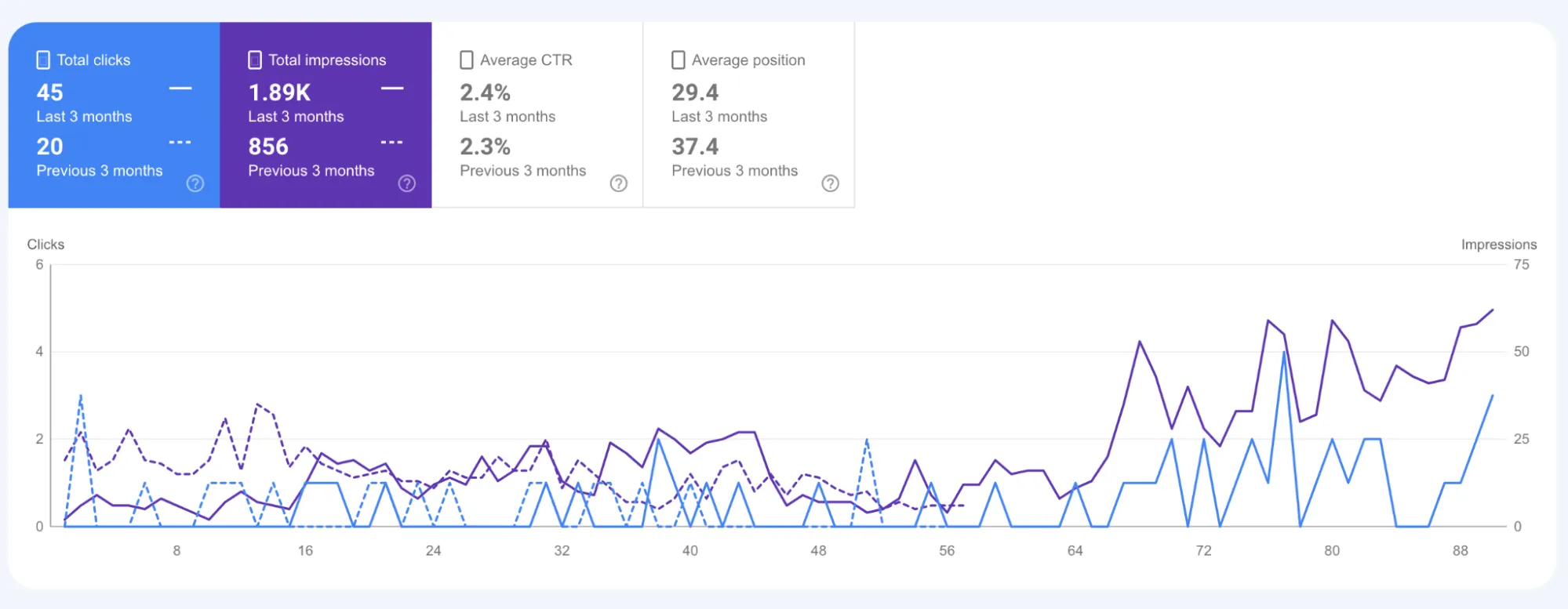
Total impressions grew by 108%, reflecting broader visibility across product and category searches.
Pages that received metadata standardization achieved a stronger ranking distribution, which increased discovery across the catalog. Improved crawl efficiency allowed new and updated pages to index faster, reducing exposure gaps during ongoing updates.
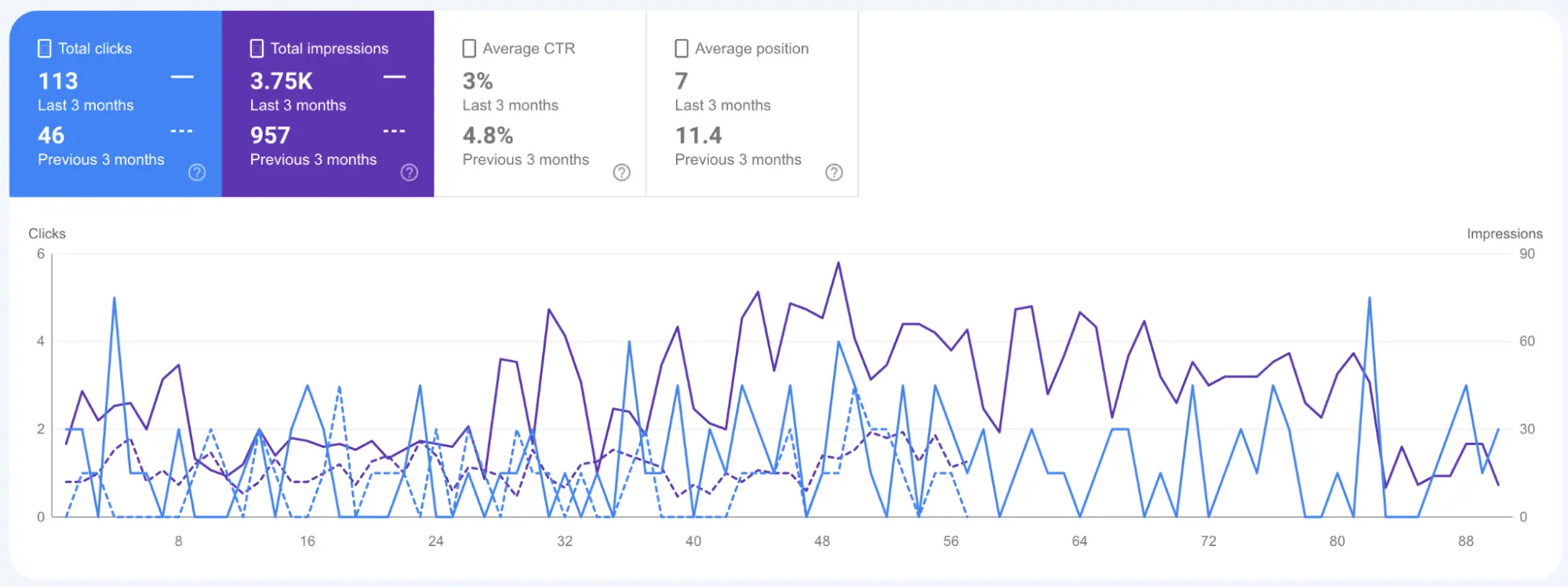
Backlink acquisition strengthened domain authority and distributed trust signals to priority pages. Homepage and category-level rankings stabilized, which improved overall search presence across competitive product terms.
Mobile engagement metrics improved as page structures stabilized and load behavior normalized. Search engines processed updates more reliably, which supported consistent visibility during subsequent optimizations.
The engagement established a scalable SEO framework suited to a large e-commerce operation. Indexation control, template-driven optimization, and authority reinforcement now support sustained organic growth across future catalog expansions and platform changes.