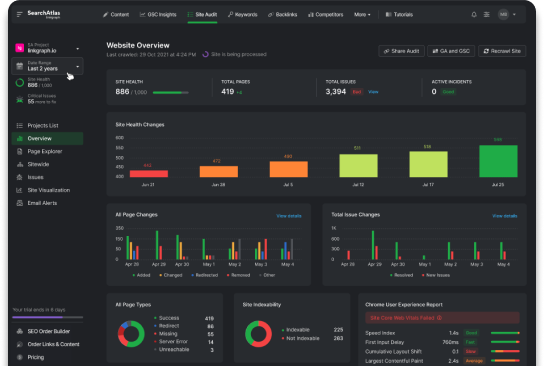

How to Optimize Existing Content | Search Atlas Tutorial
In today’s digital landscape, updating existing content is as crucial as creating new ones. We’ll guide you on how to re-optimize content using the Search Atlas software […]
In today’s digital landscape, updating existing content is as crucial as creating new ones. We’ll guide you on how to re-optimize content using the Search Atlas software suite, taking an example from the LinkGraph website.
Starting with an SEO Audit:
1. Accessing the Tool: Open the Onpage Audit tool within the Search Atlas software suite.
2. Running the Audit: Input your URL and target keyword, then click “Run audit”. This will generate a comprehensive SEO report, detailing metrics like Content Score, word count, readability, and more.
3. Understanding the Metrics: The report provides insights into Keyword Density, Focus Term Usage, and recommended links. These metrics guide your optimization strategy, ensuring your content is both user and SEO-friendly.
Optimizing Your Content:
1. Importing Content: Click “Create New Article”, input the URL, and the tool will fetch the content. Add your target keywords to get a Content Score.
2. Improving Scannability: Break down long text sections with appropriate headings. This enhances readability and user experience.
3. Adding Depth with AI: Use the Search Atlas AI writer to generate content sections. This tool can craft paragraphs, ensuring your content remains rich and relevant.
4. Structuring with Headings: Incorporate headings to guide readers through the content. This also helps search engines understand the structure of your article.
5. Enriching with FAQs: Embed a “Frequently Asked Questions” section using questions from Google’s “People also ask”. This not only answers common queries but also boosts the topical depth of your content.
6. Linking Strategically: Integrate internal and outbound links to enhance SEO. The SEO Content Assistant offers a tab that suggests relevant links, making this step a breeze.
7. Perfecting the Title and Meta: Optimize your title to reflect keywords and adhere to best practices. Craft a compelling meta description to boost click-through rates from SERPs.
Final Touches:
1. Exporting and Editing: Export your content to Google Docs for further refinement. This ensures all formatting, headings, and links are intact.
2. Visual Appeal with Images: Incorporate images throughout the content. This not only enhances visual appeal but also illustrates key points. Remember to use descriptive Alt text for SEO and accessibility.
3. Publishing Your Content: Once optimized, upload your content to your Content Management System. In our example, we use WordPress.
Conclusion:
The end result is a well-structured, comprehensive, and visually appealing article, poised to perform better on SERPs. Dive into optimization and monitor your ranking improvements with the Search Atlas software suite. Happy optimizing!